Femicide figures at 'epidemic level' - Safe Ireland CEO
Ireland's femicide figures are at "epidemic level," according to Safe Ireland Chief Executive Christine Lodge.
There have been 13 women in the State who have died in violent circumstances so far this year, nearly double the number for 2025.
The weeks leading up to Christmas are historically the most dangerous time for people living with domestic violence.
Ms Lodge said the Safe Ireland helpline always sees a surge in calls in December.
Speaking to RTÉ's This Week, she said the femicide figures are a "devastating reminder" of the scale of domestic, sexual and gender-based violence in Ireland.
However, she added that there is no single cause of femicide and the figures also highlight an increased awareness of the issue.
In the past 30 years, 291 women have died by femicide, according to data collected by Women's Aid.
"For every woman whose life is taken, thousands more are living on a knife's edge of fear," the report reads.
The Women's Aid helpline heard more than 62,000 disclosures of domestic violence against women and children last year.
In 1,321 disclosures, a man threatened to kill the woman, her children, a family member or himself.
Murders in Ireland have decreased over time, however, An Garda Síochána have identified that a growing share of murders are linked to domestic abuse.
In 2021, domestic abuse was identified as the motive for murder, manslaughter and infanticide in more than half of cases.

Meav McLoughlin Doyle endured 12 years of physical and emotional abuse from her ex-husband, a former garda but she said that she did not realise how much danger she was in once she decided to leave.
"The only time violence is generally used in a gender-based violence situation with coercive control is when the rules are being tested," Ms McLoughlin Doyle explained.
After one particularly bad assault, Ms McLoughlin Doyle decided to leave her husband and met a solicitor.
"I didn't realise the danger I was in, and that kind of had to be pointed out to me by people in the women's refuge, by the solicitor," she said.
Children impacted by domestic violence
The women's aid femicide figures also recorded 23 children who died in incidents alongside their mothers and two children died in the same incident as their sister.
Of the nearly 300 women who died violently in the past year, 157 of them were mothers, leaving 410 children bereaved.
Last year, children's charity Barnardos supported more than 1,500 children impacted by domestic violence.
National Co-ordinator of Barnardos Childhood Domestic Abuse Project Aine Costello told RTÉ's This Week that children are not passive observers of domestic abuse.
"Children are telling us that they feel unsafe, that they feel so unsafe that they worry that their mum might get killed, that they might be harmed."
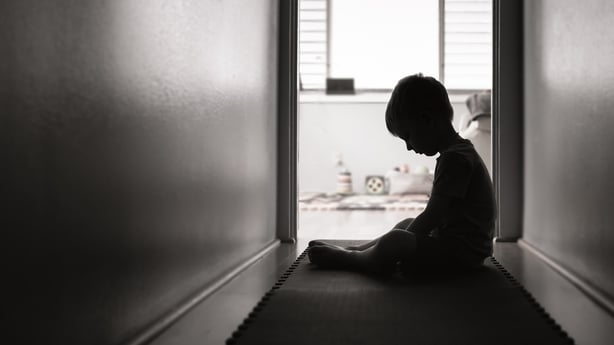
Barnardos made a toolkit to advise children on how to keep themselves safe when a domestic abuse incident is occurring. It includes advice to "don't get involved," "find somewhere safe," and "ring a trusted adult". It also advises children to try to find a way to distract themselves, if possible, and stay hidden.
"Over 30% of the families and children, young people that we work with live with domestic violence and abuse," Ms Costello said.
Barnardos are calling for increased funding for specialist support services for children living with domestic violence or abuse.
Currently, the charity has nine TLC kids groups across the country.
This is a 12-week recovery programme for children and mothers who have experienced domestic violence and abuse.
In order to have nationwide coverage, there needs to be 30 such programmes across the country, Ms Costello said.
Mental health difficulties can increase risks
The connection between mental health and domestic violence is understudied in Ireland, according to Elaine Donnelly, who is head of social work at St Patrick's Mental Health Services in Dublin.
"It's widely under-detected," she said. "It's estimated we detect about one-third of it."
Someone with a diagnosed mental health difficulty is far more likely to experience domestic abuse in their relationships.
However, the link is often not followed up on by mental health professionals, even when it is disclosed to them.

St Patrick's recently launched a toolkit to address this issue and highlight to mental health professionals how important it is for both victims and perpetrators of domestic violence.
"Perpetrators of domestic violence are three-times more likely to engage with mental health services than the general population," Ms Donnelly said.
"Mental health service contact and mental health difficulties are common in the histories of people who perpetrate domestic homicide."
One in three women and one in seven men have experienced domestic abuse.
Ms Donnelly said misogyny in society cannot be ignored in trying to reduce all forms of gender-based violence.
"Gender inequality is at the root cause of domestic violence and abuse," she said.
Lack of refuge spaces
Safe Ireland is the umbrella group for 38 services for women escaping domestic violence including the country's 20 refuges.
"It's a particularly challenging time of the year for victim survivors," the Safe Ireland CEO said.
For women who do call the helpline, they can be put in touch with their local service who can give them advice on what they can do.
Currently there are 172 refuge spaces for women in Ireland across 17 counties.
The goal is to reach a point where there is one refuge space for every 10,000 people in the country.
This would mean at Ireland's current population level, a capacity of around 553 refuge spaces is needed.
Cuan, an agency under the Department of Justice dedicated to eradicating domestic and gender-based violence has committed to creating nine additional refuges in each county that currently does not have one.
Ms Lodge believes that this will be achieved in the next three years.
"The most important thing for women who are worried today is to trust your instincts," Ms Lodge said.
"If you feel afraid, controlled, intimidated or notice you're changing behaviours to avoid a partner's reaction you may be at significant risk."
A victim of domestic abuse does not need to be physically assaulted to seek help.
Although Ms Lodge said services are getting better, she believes a whole of Government approach is needed to protect women from domestic and gender-based violence and reduce femicide figures.
"I wonder of those 291 women that have lost their lives in violent circumstances, how many of those women had to remain in an unsafe environment, because the pathway out of abuse was not there for them when they needed it," she said.
For a list of services available to victim-survivors of domestic violence and abuse visit rte.ie/helplines.
内容来自 RTE,版权归原作者所有。
阅读原文 ↗