
A celebrated Berlin designer turns her eye to kids’ furniture
If you walk through the kids’ furniture section of a Target or Walmart, you’ll get a glimpse into what adults think children like: pink for girls, blue for boys, a parade of cartoon bunnies and Disney princesses emblazoned on bed frames and step stools.
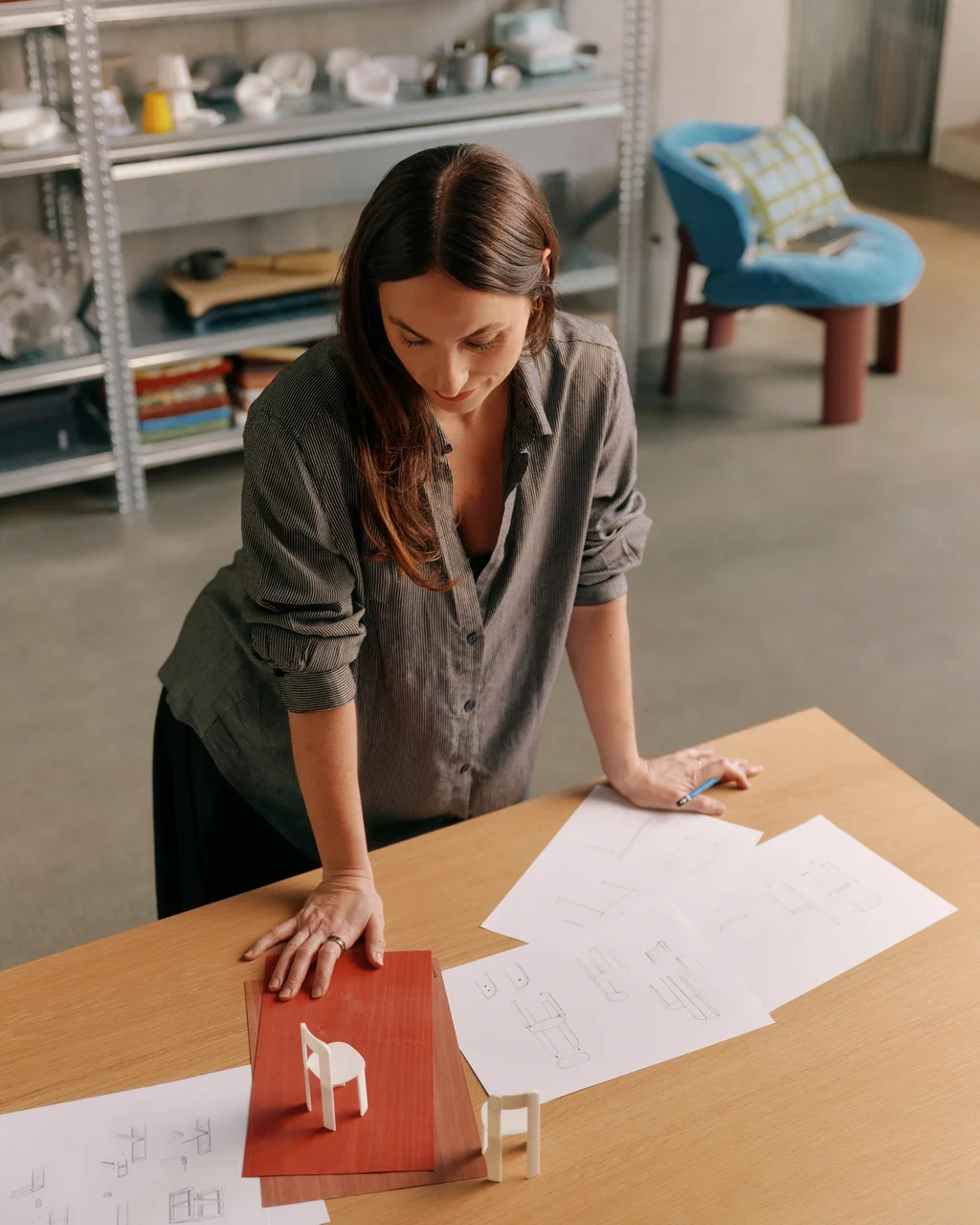
But do kids actually want all this? Or have we simply stereotyped them? Hanne Willmann suspects we underestimate children’s ability to appreciate clean, minimalist design. The Berlin-based industrial designer and founder of Studio Hanne Willmann has spent a decade making products for grown-ups: chairs and sofas for Freifrau, tables for Favius, lighting for Hartô Designs. Today, in an interesting twist, Willmann takes on the role of chief design officer for Piccalio, a six-year-old Los Angeles furniture startup.
Willmann’s new collection for Piccalio—a table and chair set made of carved wood—reflects her approach to designing for children. The pieces, which are inspired by a 1970s Swiss chair, blend the simplicity of wood with interesting curves. Willmann believes they will appeal to both parents and children, who will cultivate a taste for good design.
A European Approach
There’s a long history of European designers bringing their skills to children’s furniture. Alma Siedhoff-Buscher designed a suite of children’s furniture for a model house in a 1923 Bauhaus exhibition in Weimar, Germany, where every piece was multipurpose: a dresser cabinet became a puppet theater, a changing table became a writing desk.
In the 1930s, the Finnish designer Alvar Aalto designed a children’s version of his famous three-legged Artek stool, and it has been part of Scandinavian schools and nurseries for generations. And in Norway, Peter Opsvik’s Tripp Trapp chair for Stokke has become a global best-seller.
The founders of Piccalio—Ali Tavsanoglu and Aneta Kostic—are inspired by this history of design. They launched the startup in 2020, after a frustrating afternoon shopping for furniture for their niece and nephews. A lot of products they found on the U.S. market were low quality, covered in graphics, and inconsistent with the aesthetics of a modern home.
For their first product, they wanted to create a safe step stool for children to help their parents in the kitchen. They developed a sturdy wooden “toddler tower” with a railing that lifts small children, so they can reach kitchen counters and sinks. They began modestly, selling the $249 product on Etsy, but it quickly became a breakout. So they decided to launch their own website, where they also sold a $499 bed that won awards from Domino and Good Housekeeping. The brand is sold as well at Babylist, Maisonette, and Janie and Jack. Since 2020, Piccalio has more than doubled its sales each year, and now generates upwards of $10 million in revenue.
Bringing on an Industrial Designer
The success of the toddler tower inspired Piccalio’s founders to have broader ambitions, and reimagine other children’s furniture.
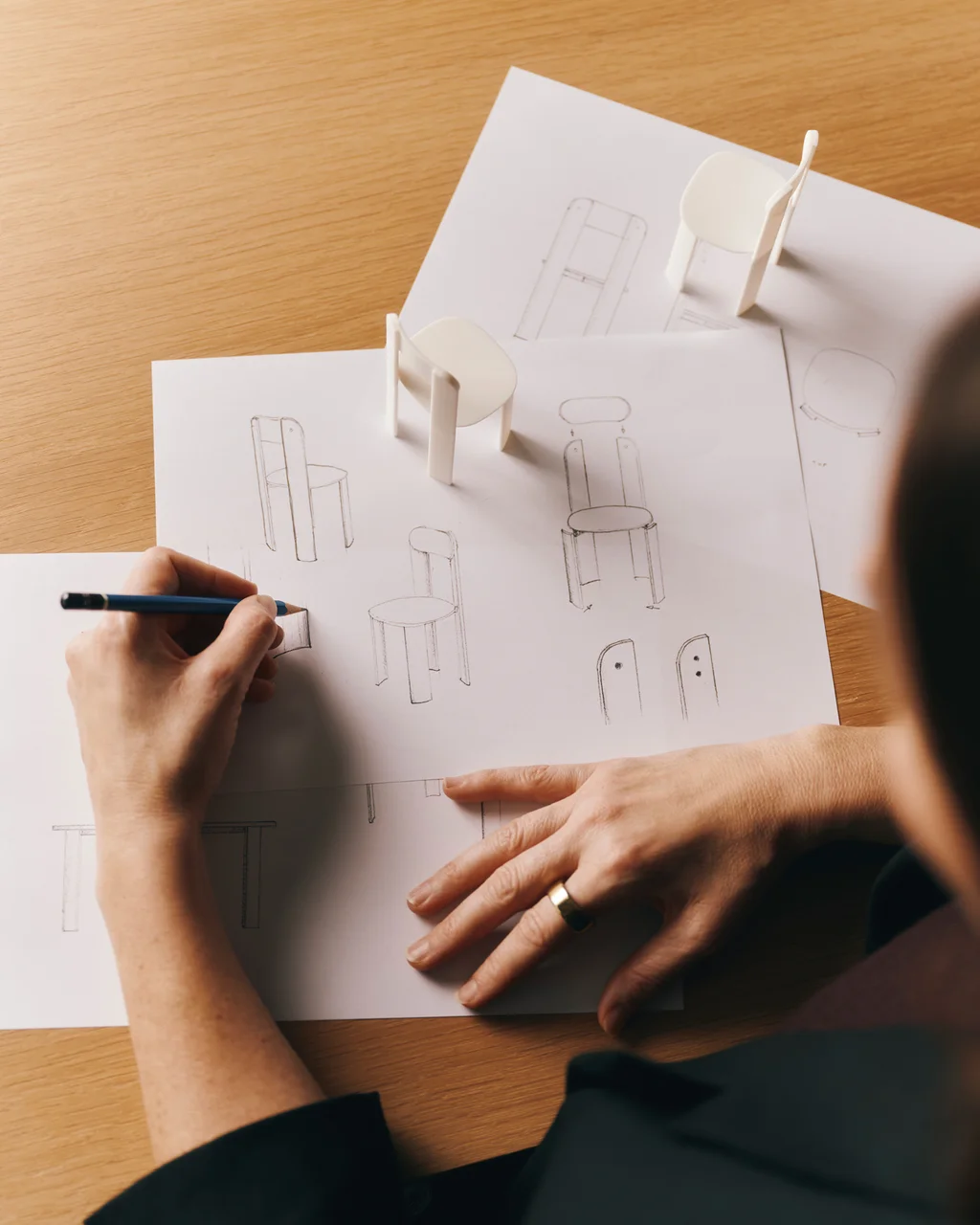
In 2022, before bringing her on as their chief design officer, they partnered with Willmann to design other furniture. Willmann’s focus is on bringing out the natural beauty in the lines and materials of the material she’s using. She wants her objects to inspire feelings, like comfort, safety, or creativity. “My work sits somewhere between sensual and functional,” she says.
When it comes to children’s furniture, Willmann takes cues from Montessori education, where child-sized furniture inspires kids to move and work independently. She wants to create pieces that accomplish a task, but that are simple enough that children can find other uses for them. “If you give a child paper, they will draw something, or make a paper plane, or create a little basket to hold paper balls,” she says. “They are crazily creative if you don’t limit them.”
But Willmann finds many Montessori-based products to be clinical or overtly pedagogical. She believes it is possible to create furniture that supports kids’ learning and creativity that is also attractive and fun. This is evident in her first project for Piccalio, which was designing a toddler table and chair set that comes in a range of calm colors, like ochre yellow and sage green. While Piccalio doesn’t share revenue figures, Tavsanoglu says that sales of this table set exceeded expectations.
The furniture is easy for a child to manipulate, and the chair can be flipped upside down or on its side to create different ways of sitting. There is a little semicircle on the backrest that evokes a rainbow, but also serves as a handle to pick the chair up. With some imagination, toddlers can transform the table into a fort or turn it upside down to pretend it is a boat; the chair can become a little bed for a doll.
“They may not even sit on it,” says Willmann. “That’s the beautiful thing about kids. I would never want to limit what kids do with products like these.”
Curved Wood Table
In her role as chief design officer of Piccalio, Willmann has created a new table and chair set, called Arcc, designed for older children of preschool age. The idea is that children will graduate from the toddler set to this set as they spend more time doing crafts, drawing, and learning to write.
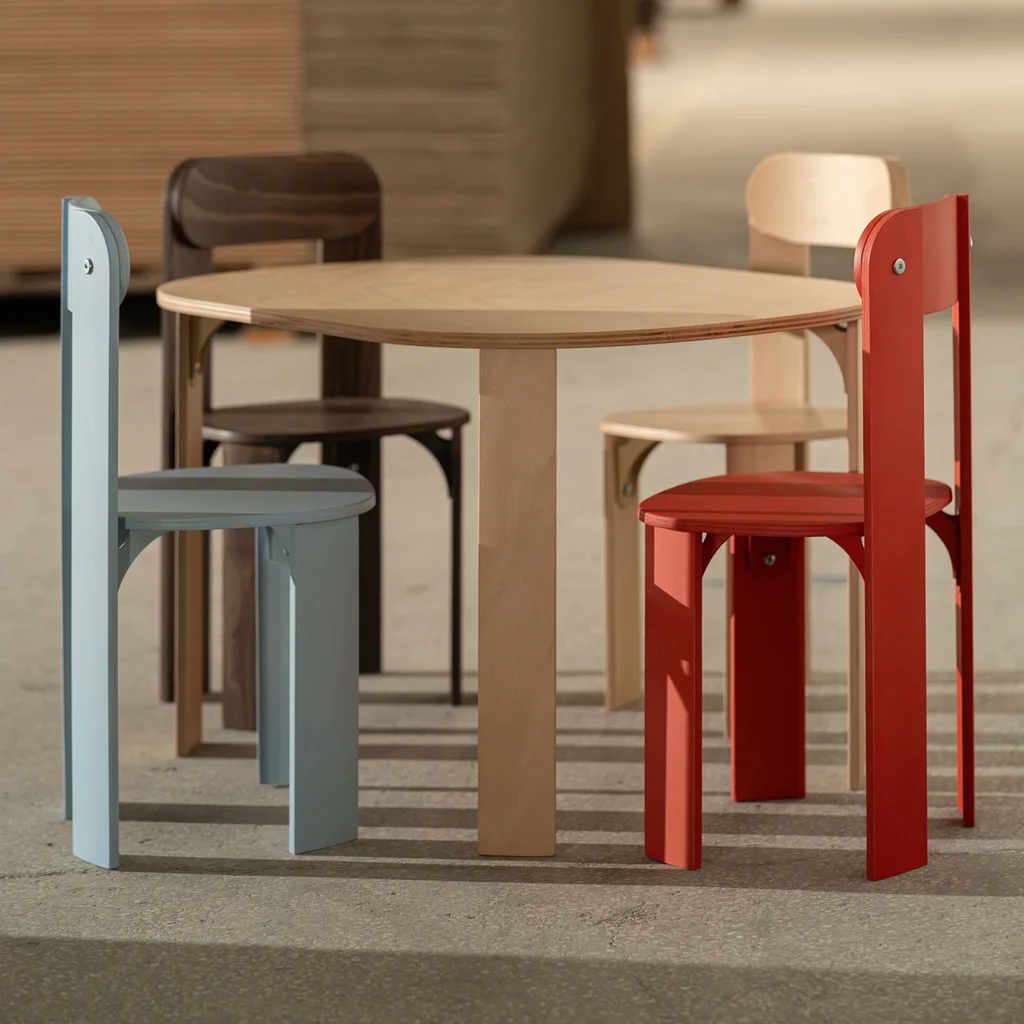
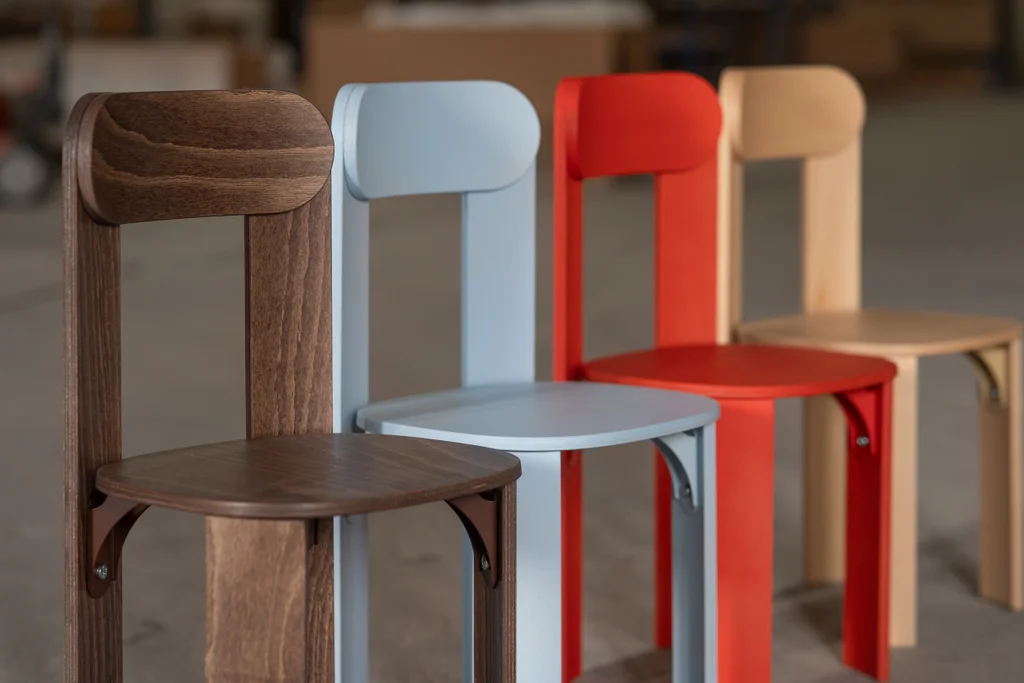
Its reference point is the wooden Rey chair, designed in 1971 by the Swiss designer Bruno Rey, which has a curved backrest, a circle seat, and rounded edges. (The Danish brand Hay now sells the chair, starting at $645.) Willmann’s version is similarly minimal, and aims to bring curved lines into the wooden furniture. There is an interesting visual contrast between the hardness of the wood and the gentle movement you sense from the arched back and legs.
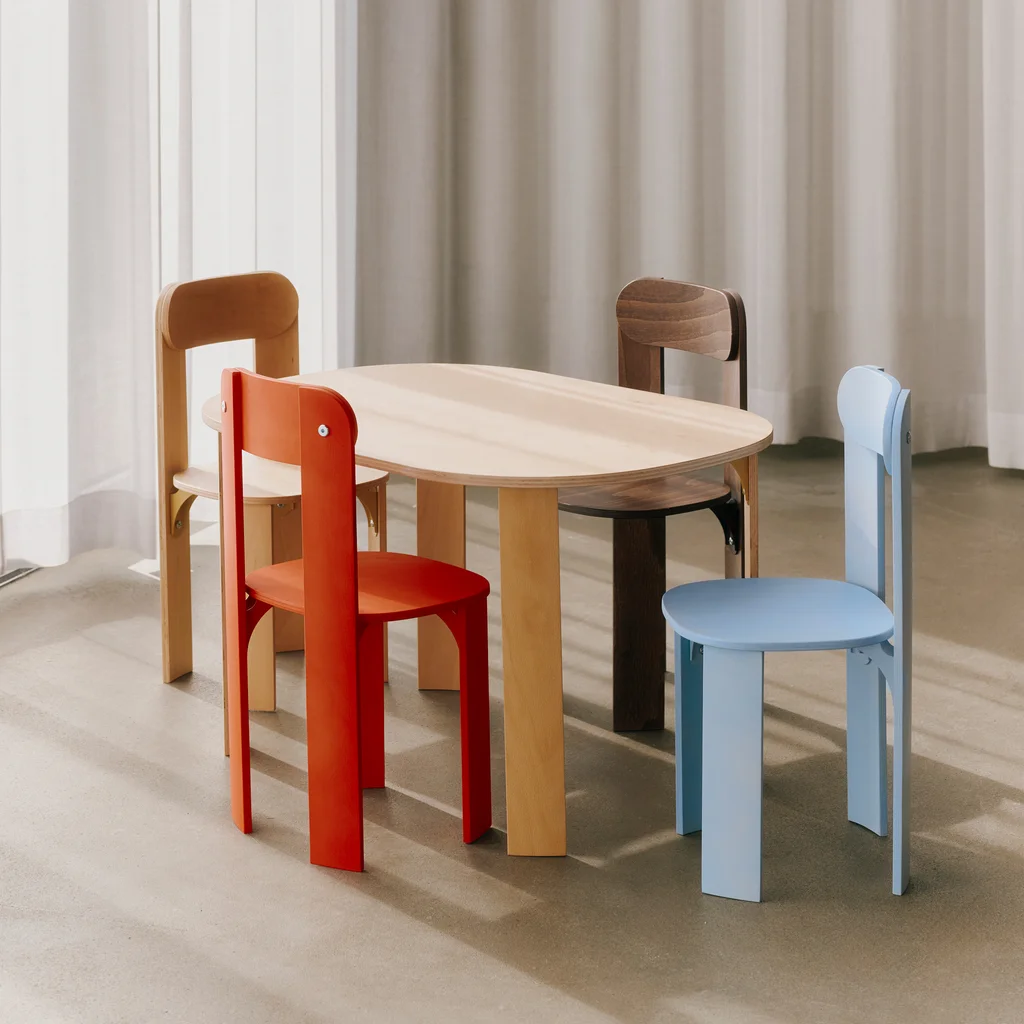
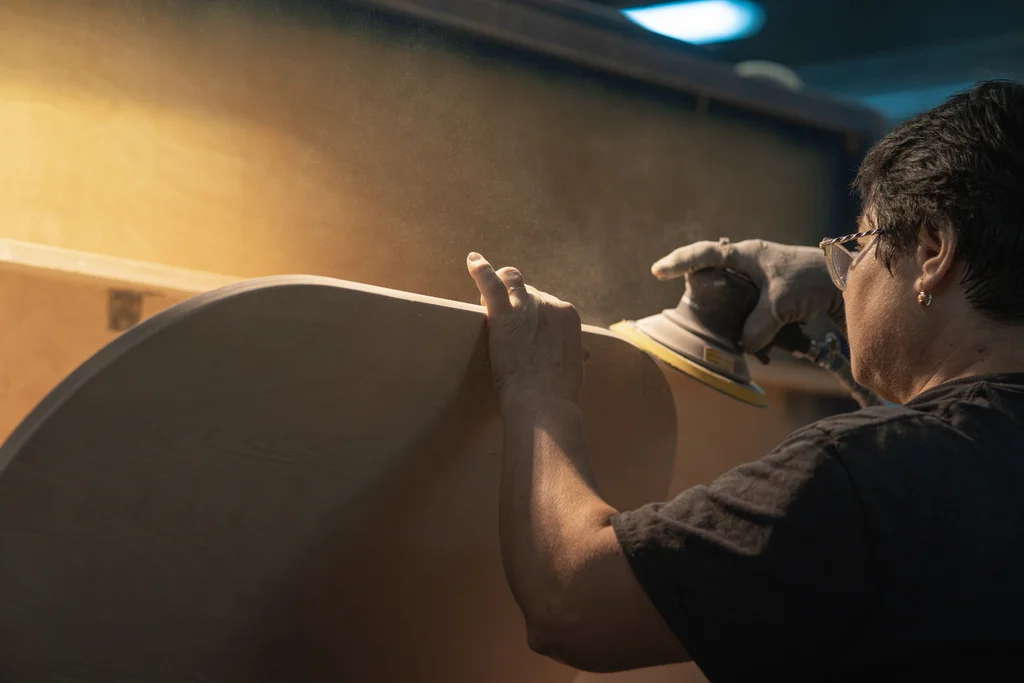
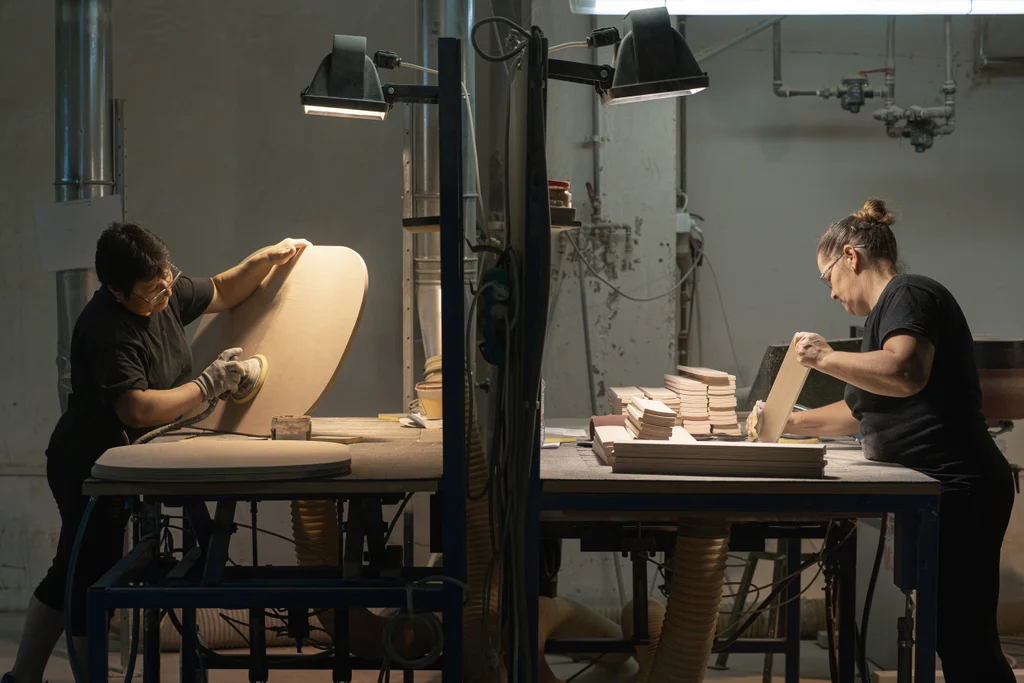
The set is made from bentwood, thin layers of wood with alternating grain that are glued and pressed together with heat. This approach requires developing a complex and expensive mold. Piccalio partners with a Romanian factory that has specialized in this technique for 70 years. The proportions are scaled to a child’s body, rather than shrunk from an adult chair. And the rounded shapes are designed to look engaging, friendly and safe, without tipping into cartoonish. It comes in several wood finishes, as well as red and light blue.
At upwards of $650 for a table and two chairs, the Arcc set is pricey. But Tavsanoglu believes there is a growing market in the U.S. for aesthetically pleasing, durable children’s furniture that pushes back against the wave of “fast furniture” that is widely available on Amazon and Wayfair.
Piccalio is part of a small but growing group of design-oriented children’s brands, like New York-based Lalo, which makes toys and furniture, and Belgium’s EcoBirdy, which makes speckled chairs and tables from recycled plastic toys. Bauen sells an award-winning table-and-chair set engineered to resist tipping.
These brands charge more than mass market, and have proven that some parents are willing to pay for pieces that fit within their home’s aesthetic. Tavsanoglu says there’s now a booming secondhand market for high quality children’s furniture, and Piccalio expects its pieces to last years of play. “Often, our pieces show up on Facebook Marketplace for 80% of what they cost new,” he says.
Many of Piccalio’s customers live in big cities where they don’t have space to shove their children’s furniture into a playroom. Families want them to match the broader aesthetic of their living room or kitchen. For Willmann, small spaces are not a disadvantage; she believes they encourage families to spend more time together.
“It can be sad if kids are off in a playroom,” she says. “My mother always told me to put the drawing table close to where the adults spend their time. Ours is next to our kitchen island, so our kids can draw while we’re cooking.”
内容来自 Fast Company,版权归原作者所有。
阅读原文 ↗