

Darach Ó Séaghdha Author and linguist
In Calling 353, bestselling Motherfoclóir author and podcaster Darach Ó Séaghdha casts a linguistic eye on how we talk about what it means to be Irish, the signs we post to each other about Irishness – and what really lies beneath it all.
“We have tested and tasted too much, lover-
Through a chink too wide there comes in no wonder”.
- Patrick Kavanagh
THIS WEEKEND, ADVENT begins in earnest, although observation of this “second Lent” has dropped off significantly this century.
Advent calendars are still popular, but the longing that they once signified is no longer endured as December is filled with Christmas parties and lunches, meetings where people promise to circle back to things in the new year, the Twelve Pubs ritual, and articles on whether or not the lyrics of various seasonal hits are problematic or not.
This might leave the modern reader slightly baffled as they approach the Patrick Kavanagh poem Advent in which the Monaghan wordsmith reflects on the positives this withdrawal from pleasure-seeking can bring – or, as he puts it, “Where the dry black bread and the sugarless tea of penance will charm back the luxury of a child’s soul”.
Maybe you’ve seen grim, cheerless footage of 1960s Ireland on Reeling In The Years and wondered what possible decadence or debauchery would have been available for Kavanagh and his “lover” (she goes to another school, you wouldn’t know her).
Well, Kavanagh found a way. In his life he was, to use his own phrase, “too much”. Kavanagh couldn’t just do something or meet someone, he had to absolutely splatter it.
Here are some of the things Kavanagh said and did which the dark evenings of Advent would mercifully stop him from doing… for a while.
Tasted too much… ice cream
In Ireland, the wholesome exertion of sport has often been suggested as an exciting alternative to the sin and sloth that goes hand in hand with other youthful activities, and the young Kavanagh was sent off as a lad to play for the now-defunct Inniskeen Rovers.
What the poet lacked in strength and skill was made up for by the fact that his father was a shoemaker, and many a match in the ‘20s and ‘30s came down to which team had the better quality boots. In 1931 the Inniskeen lads made it to the county finals where they were to play the formidable Leachtain Ui Ratgaille.
In the second half, the latter team took advantage of the fact Kavanagh snuck off to buy an ice cream to score a few easy goals.
The Donegal train
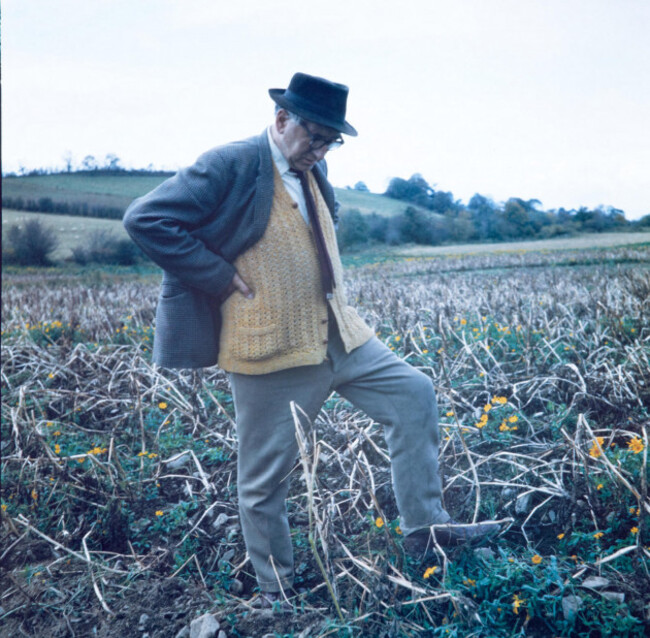
Kavanagh would often lament that it would have been good for his career if he had been involved in the Civil War, but this is doubtful if his activities would have been anything like his participation in the War of Independence.
Is Patrick Kavanagh the reason Donegal has no train service? We cannot blame him for decades of underfunding in the northwest. What we can do is reflect upon his activities as a young man in the Tan War, when he participated in the bombing of some railway tracks crossing the border and raiding trains that had been stopped. The Free State, impoverished during the Economic War and Emergency that followed, could barely spare the money to repair these tracks and the railway services were allowed to decline until stopping altogether in the early 1960s.
Canal bank “walk”
Muiris ‘Kruger’ Kavanagh, no relation to the poet, was a larger-than-life Kerryman who once served as bodyguard to public figures as different as Éamon De Valera and Mae West. Plainly, he was not a man to be trifled with. And yet, Patrick Kavanagh trifled with him.
The poet stayed at Kruger’s guesthouse in Dún Chaoin after Kavanagh’s attempted wooing of Hilda Moriarty (the muse for On Raglan Road) in her home town ended in disaster. The next morning, Kruger was disappointed to discover that the Tarry Flynn author had left without paying and, to add insult to injury, had also stolen his bike. Further insult and injury were to be added when Kavanagh wrote about his visit to the Kruger establishment and, in print, stated that he was served drink there (when Kruger did not have a licence to do so).
As you can imagine, Kruger took a dim view of all of this.
There have been differing accounts of what happened when Kruger finally caught the poet, but an enduring one is that the bard of Inniskeen found himself thrown into the Grand Canal, which is overlooked by a statue of him today.
The Munich bother
William Butler Yeats caught a lot of heat for his early support for the Blueshirts, but he distanced himself from the Irish fascist movement by 1932. Kavanagh, on the other hand, was still on the fence in the late 1940s. As a film critic he took exception to a short American cartoon, shown before the main feature he was reviewing that week, which made light of Hitler and Mussolini’s recent deaths, calling it “an insult to human dignity”.
He complained about American movies which painted the Gestapo as villains. And he especially disliked Charlie Chaplin, the star and director of The Great Dictator. In Antoinette Quinn’s brilliant biography of the poet, she asks if he was the notorious heckler in Dublin cinemas who’d shout “Haw Haw” during newsreels about achievements of the Allies in the war.
Not making hay
This year has seen numerous writings on the 60th anniversary of free secondary school education and reflections on the minister who finally brought it over the line, Donogh O’Malley, an especially promising politician who would die too young the following year.
O’Malley married a Kerry doctor by the name of Hilda Moriarty who was the love of Patrick Kavanagh’s life. Kavanagh was already a Fine Gael voter and probably wouldn’t have liked the Limerick rugby star turned TD anyway, but winning the hand of his best girl would have pushed his hatred into overdrive.
One of Moriarty’s classmates in UCD Medicine was future president Patrick Hillery, who would become a close political ally of O’Malley. In Unfulfilled Promise, a collection of interviews with people who knew the O’Malleys, President Hillery reflected on how the poet would often turn up at events where O’Malley was due to speak just to heckle his love rival. At one such event, Hillery approached the poet and said “you’ve had your fun, here’s a few shillings to eff off, go get a pint and leave the O’Malley’s alone”.
Kavanagh took the money but snuck back into the event wearing a different hat. At this point it is understood that a more direct approach was taken to ejecting the writer from the premises.
Advent
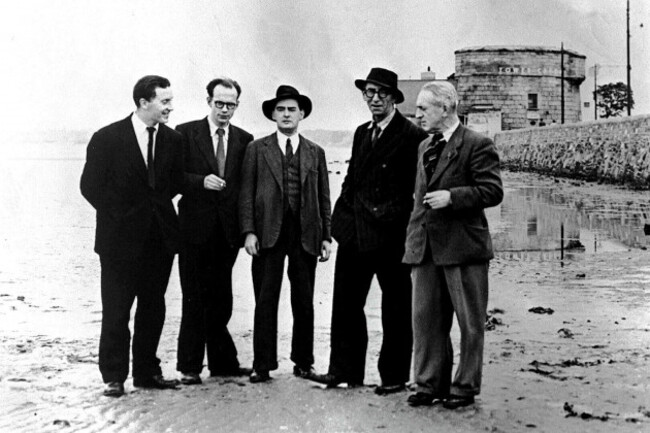
I could go on – I have not even mentioned Kavanagh’s appearance at the first-ever Bloomsday walk which ended in a drunken fistfight, his appearance at a function in Áras an Uachtaráin in sandals with his unclipped toenails visible for all to see, or how his hatred of the Beatles led to teenagers in 1960s Ireland starting a letter-writing campaign to have him fired.
But it would be unfair to consider his many embarrassing capers without remembering that, as Christmas approached, he did try to lay off the hijinks for a bit and “return to Doom the knowledge we stole but could not use.”
Darach will be back next Sunday with more thoughts on the words and Irish cultural phenomena that unite us.


