
Third retraction for former marine ecologist could ‘reopen wounds’ in decade-long scientific dispute

Sandra Binning feels like she’s “being dragged back 10 years to a time in our careers that was honestly very, very difficult.”
A fish ecologist at the University of Montreal, Binning was part of a group of scientists who attempted to replicate findings that flipped the field of marine behavior on its axis: Increased carbon dioxide in seawater, or ocean acidification, can debilitate the ability of fish to detect predators. Papers supporting the conclusion primarily came from marine ecologist Danielle Dixson.
In 2021, a Science news story reported on more than 20 studies that had come under scrutiny, including Dixson’s research. A subsequent investigation by the University of Delaware, where Dixson was once an associate professor of marine ecology, found she had committed research misconduct, which led to her dismissal.
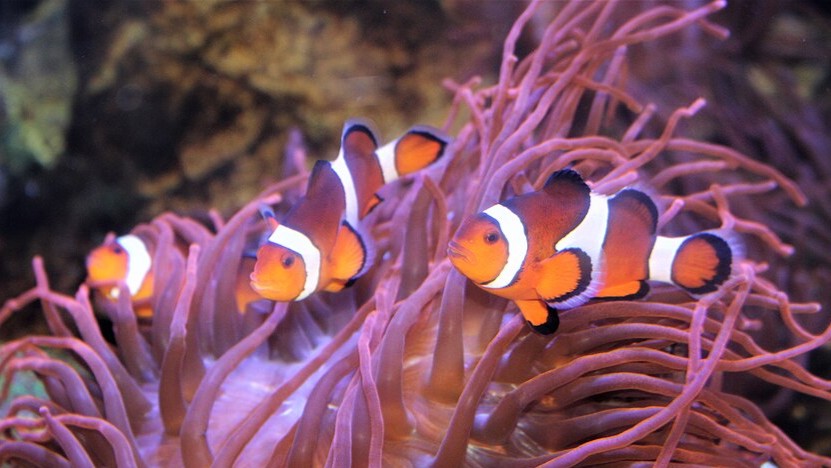
Now, four years after that investigation, Ecology Letters has retracted Dixson’s 2009 paper on the effects of ocean acidification on clownfish behavior. The paper, published while she was a Ph.D. student at James Cook University in Townsville, Australia, is Dixson’s third retraction. The paper has been cited 412 times, according to Clarivate’s Web of Science, including 86 times since it was flagged in 2020.
The retraction came just as Binning and colleagues published data collected a decade ago while trying to replicate Dixson’s work. “Quite frankly, I would have preferred not to have to spend time justifying our research and have it being linked so intrinsically with this retraction and this fraud,” Binning said. “It’s painful.”
According to the August retraction notice, “a third-party complainant” alerted the publishers to “statistically implausible variance in the data.”
Timothy Clark, a fish physiologist and professor at Deakin University in Victoria, Australia, along with Binning and others, alerted Wiley, which publishes Ecology Letters, to concerns about Dixson’s research after attempting to replicate her work. Over three years, Clark and colleagues tested whether ocean acidification could impair the behavior of fish in coral reefs, and found no effect, they reported in Nature in 2020. Their critique opened the floodgates to a field-wide dispute. Many accused the researchers of being climate deniers who dismissed the impacts of ocean acidification on marine life, while few stood by their choice to challenge Dixson’s widely publicized conclusions.
“There were big fallouts with friends and colleagues,” Binning said.
When the researchers tried to inform Dixson’s team of their findings, they were met with a “brick wall and skepticism” about their methods, said Dominique Roche of Carleton University in Ottawa, another fish ecologist on the replication experiments team.
Dixson did not respond to Retraction Watch’s request for comment by email and phone.
While the Ecology Letters paper stemmed from Dixson’s doctoral research, her two previously retracted papers came from later stages of her career during her postdoc at Georgia Tech and later at her own lab at the University of Delaware. The earlier retraction statements echo the same concerns raised in the latest notice about her experimental timeline and a lack of confidence in the data’s validity.
A spokesperson for Wiley did not respond to a question about why the retraction happened six years after the paper was flagged. The publisher offered no further comment beyond its notice.
Holden Thorp, the editor-in-chief of Science who signed the journal’s 2022 retraction of one of Dixson’s papers, explained that the time between publication and retraction can depend in part on the journal’s size. “Science only publishes 750 papers a year, so our capacity to put a lot of effort into these retractions is very different from much bigger publishers,” Thorp said.
For graduate students, the delayed retraction poses a risk for those who “wasted their entire Ph.D. on a question based on bogus data,” Binning said.
Roche and Binning continued trying to replicate Dixson’s conclusions after their original attempt, leading to new findings on behavior of individual damselfish. In a paper published Oct. 8 in the Journal of Animal Ecology, the researchers reported their results from experiments conducted at Lizard Island in 2016. This research occurred in tandem with their investigation into Dixson’s work.
“This was 10 years in the making,” Roche said. “We wanted to look a bit deeper into individual-level differences. We thought maybe something was happening that we didn’t see across a population.”
Once again, the researchers found little to no effect of increased CO2 on fish behavior.
“Even though it took us 10 years to publish the paper, it’s still novel,” Binning said.
The authors of the new study wrote a recent blog post about the role of the now-retracted paper. “The journal Ecology Letters recently retracted one of the key early studies that helped establish the expectation of severe behavioral impairment from ocean acidification in reef fishes,” the researchers wrote. “Retractions are an uncomfortable part of how science corrects itself, but they matter here because the affected work is heavily cited and continues to shape reviews, models, and policy framing.”
Like Retraction Watch? You can make a tax-deductible contribution to support our work, follow us on X or Bluesky, like us on Facebook, follow us on LinkedIn, add us to your RSS reader, or subscribe to our daily digest. If you find a retraction that’s not in our database, you can let us know here. For comments or feedback, email us at team@retractionwatch.com.
内容来自 Retraction Watch,版权归原作者所有。
阅读原文 ↗