
Electronic ankle tag pilot to monitor up to 150 prisoners
Updated / Wednesday, 25 Nov 2026 12:39
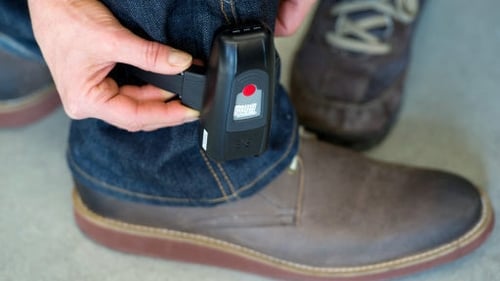
The Minister for Justice Jim O'Callaghan has launched a new electronic monitoring pilot scheme for tagging inmates on temporary release and people on bail who are not deemed a danger to the public.
Up to 50 electronic tags are to be used to monitor up to 150 people during the year long project.
Mr O'Callaghan says the programme is designed to enhance offender management and provide suitable alternatives to custody, as well as addressing prison overcrowding.
There are currently 700 inmates above capacity in the country’s prisons, 225 of whom are sleeping on mattresses, with the prison system currently at 116% capacity.
Electronic Monitoring involves a person wearing an electronic ankle tag to help the authorities check whether they are following certain conditions while living in the community.
The electronic ankle tags which operate on a combination of Radio Frequency (RF) and Global Positioning System (GPS) technologies are designed to monitor curfews, residence and location restrictions.
The system, which will generate alerts where a potential breach or interference with a tag is detected is being run by a private company, Allied Universal Electronic Monitoring, which won the contract through a public procurement process.
The minister also says a dedicated electronic monitoring unit has been established within the Department of Justice to monitor performance and co-ordinate the operation of the programme across the justice sector, including the gardaí, the courts, the probation and the prison service.
The scheme will be available to the courts in the designated bail pilot area next year as an additional option when setting bail conditions in appropriate cases whereby judges can impose tagging to support compliance with conditions such as a curfew or exclusion from specified locations.
Mr O’Callaghan also says the programme is not a replacement for custody and considerations such as the profile of offender, the nature, the type and the seriousness of the offence will be "foremost" when assessing a person’s suitability for electronic monitoring.
The scheme will run for 12 months with the first phase to focus on suitable people on temporary release before expanding to certain bail cases early next year.
A total of €2.1 million has been allocated to the project, with a further €1.5 million to be allocated in 2027.
It is almost 20 years since the legislation to allow for electronic tagging of inmates and the former minister for justice Dermot Ahern announced it was to be used to monitor sex offenders in 2009.
A previous pilot was run in 2010 involving 20 low risk prisoners but the move towards tagging was abandoned following a review in to cost and effectiveness.
Equipment faults were also noted in the 2010 trial including in one instance where the tag fell off a prisoner's ankle while he was on a bus and he had to bring it back to the prison.
More stories on
内容来自 RTE,版权归原作者所有。
阅读原文 ↗