
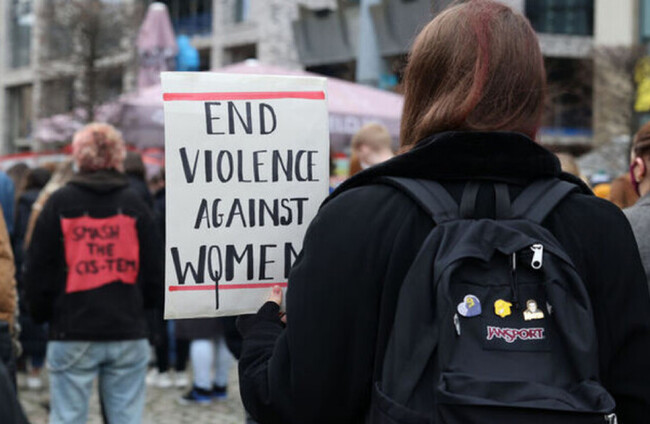
CLOSE TO 70% of women murdered in Ireland over the past three decades were killed in their own homes.
Women’s Aid began its femicide watch in 1996 and has today published its 2025 annual report.
The report shows that 291 women have died violently in the Republic of Ireland since 1996.
Meanwhile, 13 women have died so far in 2026, compared with seven last year.
In resolved cases, almost nine in 10 women (89%) were killed by a man they knew, and more than half (57%) were killed by a current or former partner.
Over two in three women (68%) were killed in their own homes.
The report also shows that 25 children have been killed alongside a woman, usually their own mother.
Some 410 children have lost their mother to femicide since 1996, most of them under 18.
And in 32 cases (11%), no one has been held accountable, while nine women remain missing, believed murdered.
The report also shows that after falling for two decades, violent deaths of women rose by 29% between 2016–2020 and 2021–2025.
To mark the 30th anniversary of the femicide watch, Women’s Aid has launched ‘We Remember’.
It’s an online memorial remembering all the women included in the femicide watch.
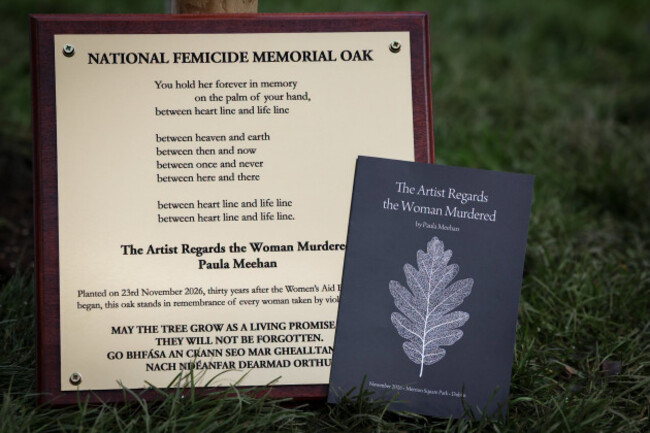
And earlier this week, with the support of Dublin City Council, Women’s Aid also planted the National Femicide Memorial Oak in Merrion Square Park, in memory of all victims of femicide on the island of Ireland and across the world.
Women’s Aid CEO Sarah Benson said her organisation maintains a femicide watch “so that no woman’s death is forgotten”.
She added: “Our intention is to ensure that each woman is remembered for who she was, rather than how she died.”
She also noted that according to the femicide watch, “the greatest danger comes from men women know”.
Of the 235 resolved cases, some 89% were killed by a man known to them.
Of this, 57% were killed by a current or former partner, while 32% were killed by a male relative or acquaintance.
Benson also noted that there have been 25 murder-suicides since 1999.
In 24 of them, the killer was the woman’s partner or ex-partner; in the other, it was her son.
Benson said these findings “match what UN and EU data show”.
“The most dangerous place for a woman is her own home, and the most likely killer is a man she knows, very often a current or former partner,” said Benson.
“Intimate partner femicide rarely comes out of nowhere. Separation, coercive control, non-fatal strangulation, threats to kill and stalking are all known warning signs.
“When a woman tells Women’s Aid that she is afraid for her life, we believe her.”
Last year, Women’s Aid received close to 38,000 contacts, during which over 62,000 disclosures of domestic violence against women and children were made.
These included over 1,300 disclosures of a man threatening to kill a woman, her children, a family member or himself, as well as over 500 disclosures of non-fatal strangulation.
There were also 906 disclosures of stalking, and more than 1,500 disclosures of abuse during pregnancy.
Meanwhile, Benson remarked that domestic violence services across Ireland “currently use a patchwork of risk assessment tools” and that a “national risk assessment framework” is needed.
If you have been affected by any issues raised within this article, support is available here:
- Women’s Aid 24-hour National Freephone helpline 1800 341 900
- National Male Advice Line 1800 816 588