
Govt and Opposition clash over future of Triple Lock
Government and Opposition parties have clashed over the future of the Triple Lock during the first of three Oireachtas Committee on Defence meetings on the potential law change this week.
Minister for Defence Helen McEntee faced criticism from Labour, the Social Democrats, Sinn Féin, Aontú, People Before Profit-Solidarity and Independent TD Séamus Healy during initial exchanges on Tuesday night.
The Triple Lock ensures any deployment of 12 or more Irish Defence Forces abroad on peacekeeping missions can only happen after Dáil and Government ratification and be linked to a UN Security Council resolution.
The committee met this evening for just under three hours to begin discussing some 224 amendments submitted in relation to the highly contentious Defence Amendment Bill 2026.
The committee is also due to meet for an extra day this week in a bid to speed up its discussions over the potential law change.
The committee will now meet tomorrow between 6pm and 9pm, in addition to this evening and Thursday morning sessions.
The decision was taken due to the fact 224 amendments have been submitted for examination by the committee - a figure likely to take a significant amount of time to go through in detail.
During this evening's meeting just six amendments were discussed.
The first five of which were immediately ruled out as they sought to include a reference in the bill for a referendum.
A sixth amendment, by Aontú leader Peadar Tóibín, was the focus of most of the discussion and focused on technical issues relating to Dáil and Seanad votes on individual potential future foreign deployments of Irish defence forces personnel.

Speaking at the start of the meeting, Minister for Defence Helen McEntee said "today's world is different" from when the Triple Lock was introduced in the 1960s, before stressing that claims the law change "will end neutrality or send people off to war are simply not true".
Mr Tóibín responded by saying the Nice referendum guaranteed Irish neutrality, saying "there is a deep concern" among the public over the potential situation.
People Before Profit-Solidarity TD Paul Murphy said "this should be put to the people in a referendum" and that having United Nations involvement "is a good thing" in his view.
Sinn Féin TD Donnchadh Ó Laoghaire - referenced former Tánaiste and then foreign affairs minister Brian Cowen's comments more than 20 years ago - when he said a referendum would need to take place to remove it.
Labour TD Duncan Smith said his concern is Ireland is leaving "one gang" - the UN - to another, the EU.
In response to the remarks, Fine Gael TD Catherine Callaghan criticised what she suggested was filibustering, telling committee chair and Sinn Féin TD Rose Conway-Walsh that she thoguht "they talked about everything there".
She asked Opposition TDs if the wording of a hypothetical referendum, the possibility of which was ruled out in the Dáil last week, should be if Ireland is happy to be told what to do by UN Security Council permanent members - Russia, China, the US, Britain and France.
Deputy Callaghan said removing the Triple Lock is "not ending neutrality".
No Fianna Fáil member spoke at the committee meeting.

There is a growing likelihood of further meetings being needed next week after the meetings scheduled this week.
Such a move would put pressure on Government TDs and Senators on the committee, which has a one-person Government majority, to guillotine the committee discussions.
This a situation which would in turn lead to Opposition claims that the debate is being blocked.
Minister McEntee, Taoiseach Micheál Martin and Tánaiste Simon Harris among others have stressed in recent weeks that they want the Triple Lock to be removed and the Defence Amendment Bill signed into law by the end of the year.
This, they argue, is because the United Nations Interim Force in Lebanon (UNIFIL) deployment to Lebanon ends on 31 December, and Ireland must be in a position to act to fill the role after this point.
Should the bill pass the committee stage, it will return to a final report stage at a Dáil and Seanad vote.
As of this point, 11 more Dáil sitting days are due to occur between now and the final sitting day of the year, Thursday 17 December.
The bill will also need to be sent to President Catherine Connolly.
President Connolly would at that stage have to make a decision on whether to sign the bill into law, consult with the Council of State, or refer it to the Supreme Court only if she believes it is unconstitutional.
While the committee has a one-person Government majority, there is a widespread belief Opposition committee members will seek to slow walk the amendments discussed, a possible move Opposition parties say is about closely examining all amendments.
Although the Government can in theory guillotine discussions due to its majority, there is a similar belief this would be seen as limiting debate.
Opposition parties though have significant concerns over removing the Triple Lock.
Last month, an earlier Dáil vote saw the bill supported by 79 votes to 71, while a separate non-bill motion last week to have a referendum on it was defeated by 84 votes to 77, with Independent TD Barry Heneghan voting against the Government.
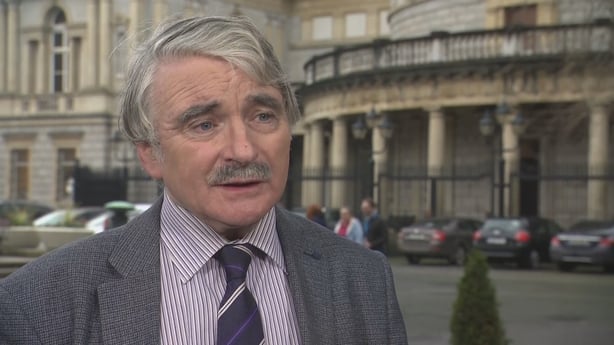
Much committee attention is likely to be paid to a Fianna Fáil backbench amendment led by former Minister for Defence Willie O'Dea to replace the UN Security Council element of the existing Triple Lock with a UN General Assembly resolution rule.
At the weekend, Government sources confirmed Ms McEntee has received permission to draft a similar amendment to "consider" such a move and table it at final report stage, should the bill pass through the Oireachtas Committee on Defence.
However, several Opposition parties have said while they will consider the proposal.
They believe it needs to be far clearer on the exact nature of what would need to happen at the UN General Assembly and how any Government of the day would interpret it before they can consider supporting it.
内容来自 RTE,版权归原作者所有。
阅读原文 ↗