
How a Los Angeles freeway became home to the world’s largest wildlife bridge
How do you design a bridge that a mountain lion mistakes for a hillside? That’s the design challenge behind the massive new Annenberg Wildlife Crossing, which stretches across 10 lanes of the 101 freeway northwest of Los Angeles.
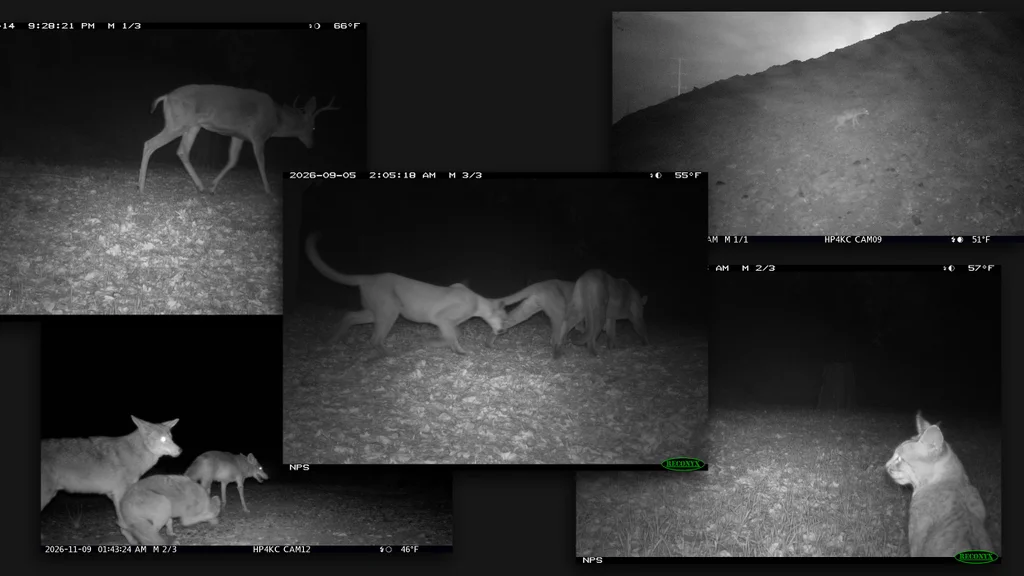
The crossing—the largest of its kind in the world—won’t officially open until December 2, and even after that point, some construction and habitat restoration will still be underway around the main structure. But animals have already started using it, from a coyote to lizards and Western bluebirds. Around 450 species live in the area. It’s not yet known how many animals will cross the bridge each year, though for apex predators like mountain lions, even a few crossings a year could be crucial to the populations’ survival.
Getting it right took more than a decade of planning and design work. It was the opposite of a typical infrastructure project, with greenery as an afterthought after the concrete is in place. “All of the infrastructure is there in service of this habitat connection,” says Robert Rock, CEO of Rock Design Associates, the lead landscape architect behind the Annenberg Wildlife Crossing.
Reconnecting a fragmented ecosystem
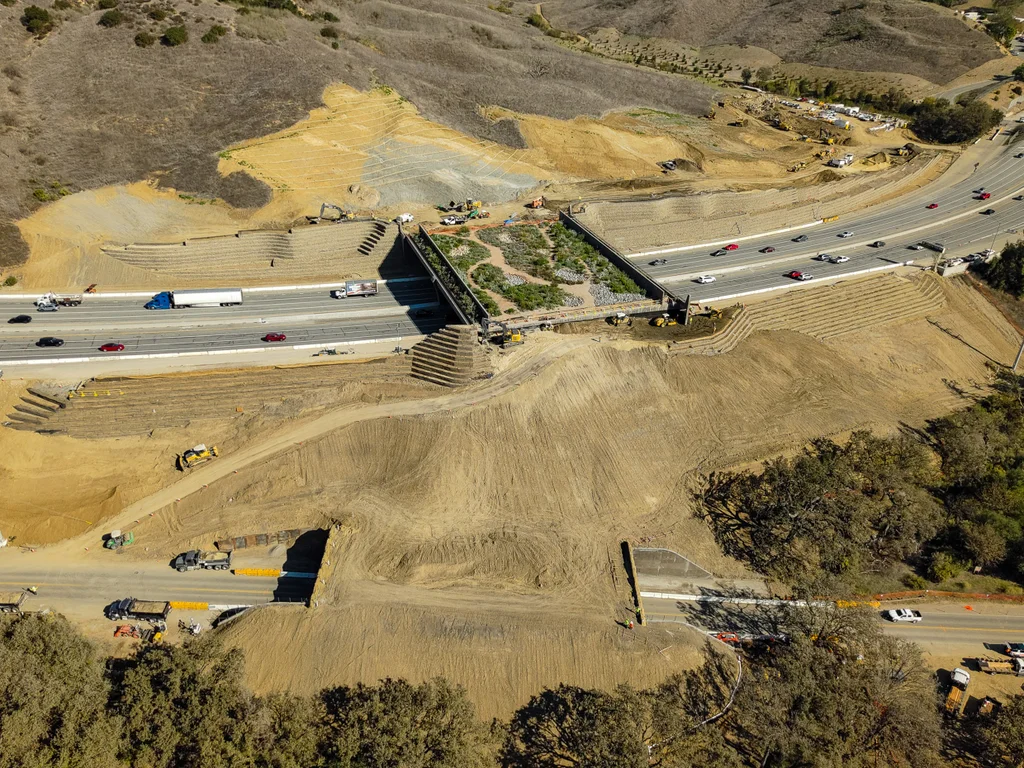
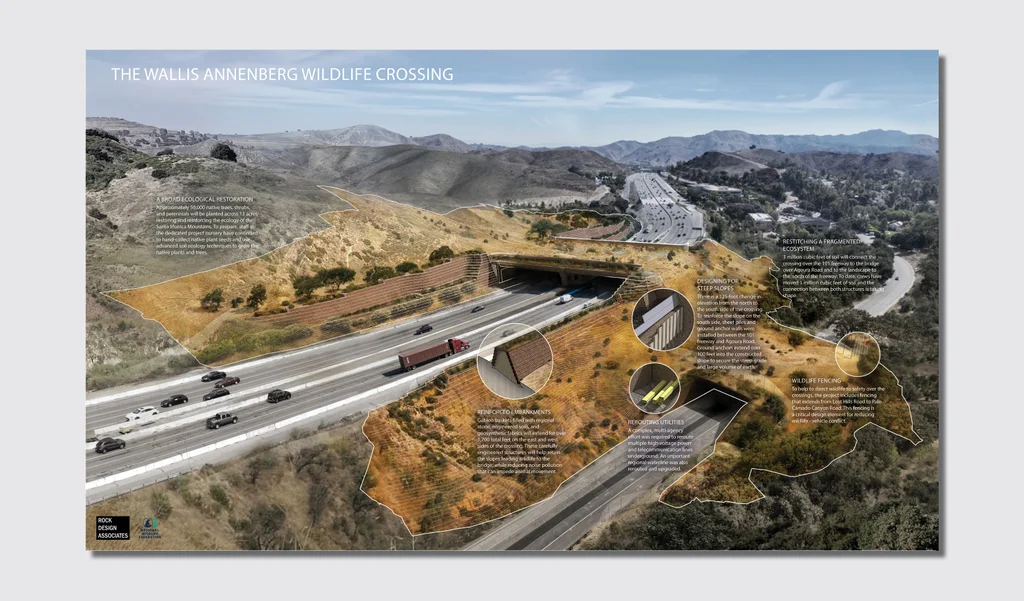
The project is helping restitch an ecosystem that was split apart by the freeway. To the south is sprawling open space in the Santa Monica Mountains; to the north, there’s more protected land that indirectly connects to the Angeles National Forest. The new crossing includes the main bridge across the freeway, a second smaller bridge across a nearby road, and around 13 acres of habitat restoration.
Before the bridge existed, data showed that most wildlife that approached the freeway would turn around. The road, with around 300,000 cars passing every day, makes it nearly impossible for animals to cross. That’s especially a problem for mountain lions, since young male mountain lions need to be able to find new territory. A 2016 study found that the fragmented habitat and inbreeding meant that mountain lions faced steep population decline and a 99.7% chance of local extinction within 50 years.
Conservation groups suggested the idea of a crossing as early as the 1980s, and Caltrans, the state transportation department, started studying the idea in 2003. But there wasn’t dedicated funding to build it. Despite more studies, the project stalled.
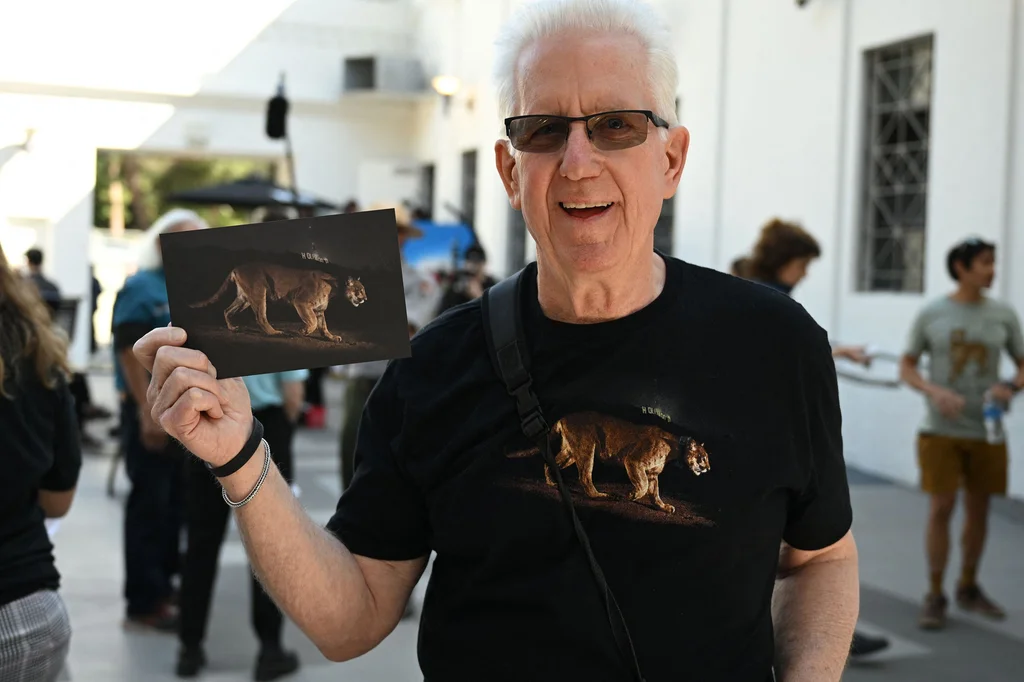
A turning point came in 2013, when a mountain lion living in Griffith Park, surrounded by L.A.’s urban sprawl, was photographed under the Hollywood sign and went viral. Known as P-22, the lion had managed to cross the 101 freeway, his tracking data showed. The National Wildlife Federation and the Santa Monica Mountains Fund made P-22 the face of a new campaign for a crossing, and funding started to pour in. By 2019, final design work was underway.
A ‘giant green roof’
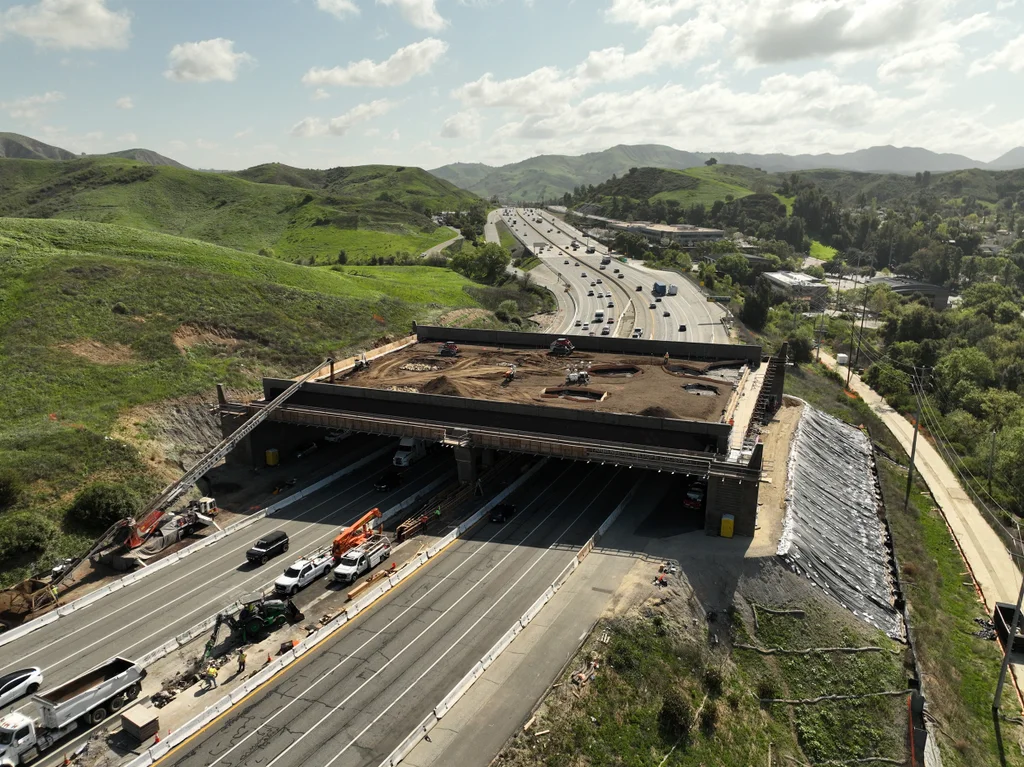
The main bridge, at 250 feet wide, is designed to be big enough to comfortably accommodate all the different species that might need to cross it, from bobcats and mountain lions to rabbits and squirrels. The size is based on research from other wildlife crossings—like one in Banff National Park in Canada, where elk and grizzly bears use a bridge over a highway. (The U.S. Federal Highway Administration’s design guidelines suggest that crossings should be at least 130 feet wide.)
The designers worked carefully with scientists to understand what different species in the area needed to feel comfortable crossing. “This was a huge kind of professional translation between us on the design side and the biologists on the science side,” says Rock.
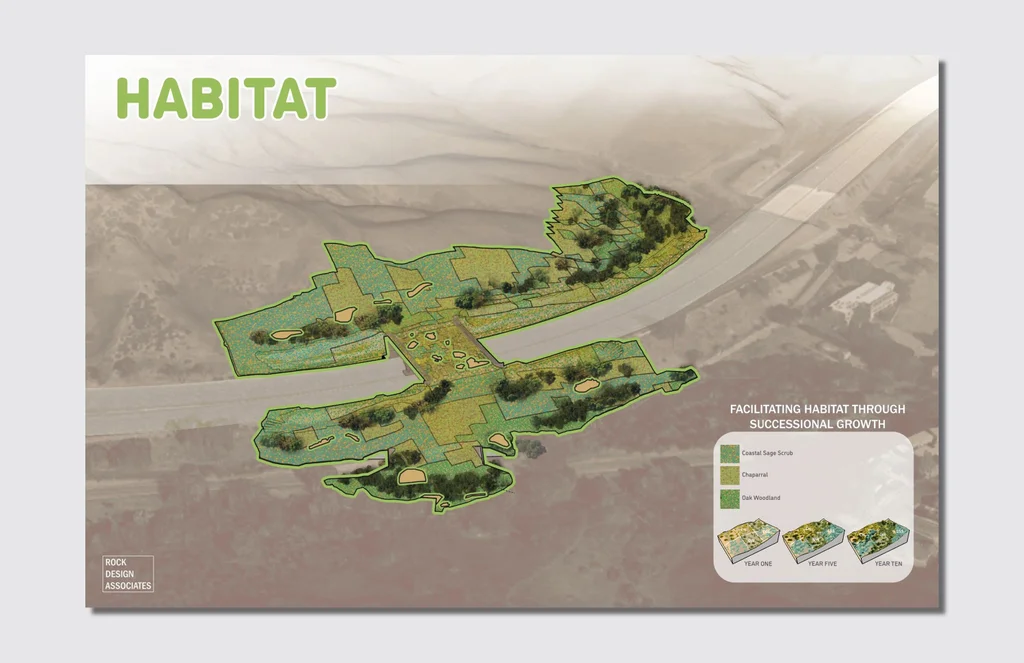
Small prey animals need connected plantings to scurry through without open space; deer need open pathways so they have a clear view of what’s ahead. In between plantings on the bridge, there’s a path made of aggregate that can keep plants from spreading and preserve some open space.
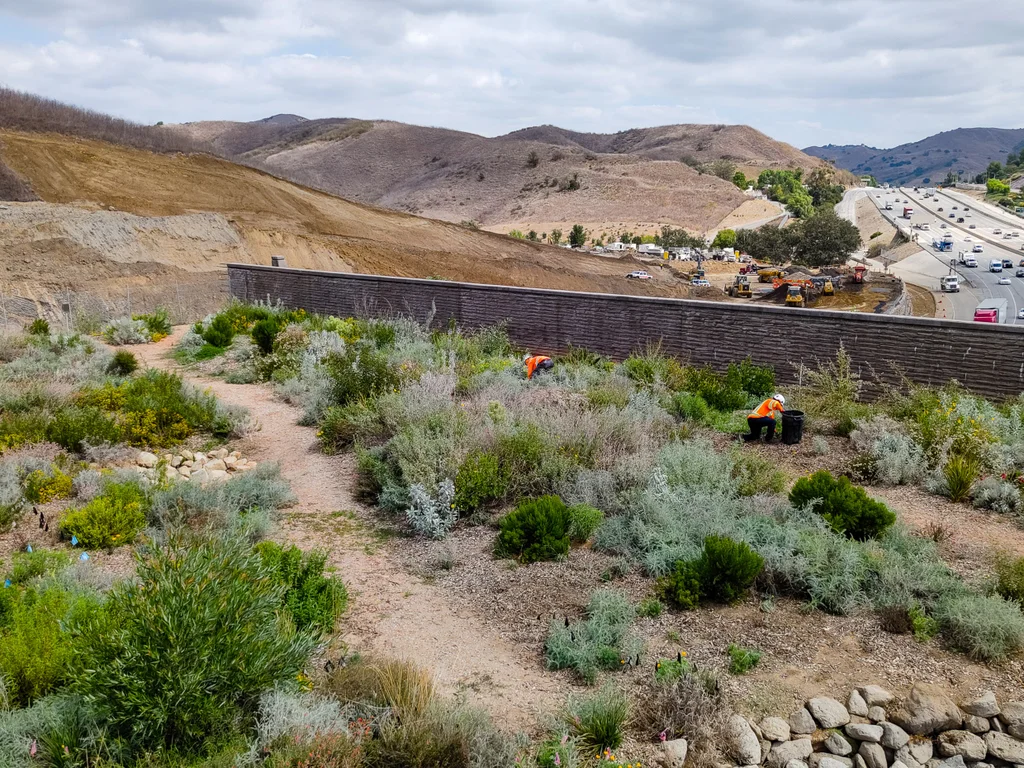
The bridge recreates native coastal sage habitat in what Rock compares to a “giant green roof.” Because the crossing sits in the middle of the area that burned in a huge wildfire in 2018, the team is also carefully restoring habitat leading up the bridge. The team collected more than a million seeds from other wild areas nearby, then grew plants in its own nursery.
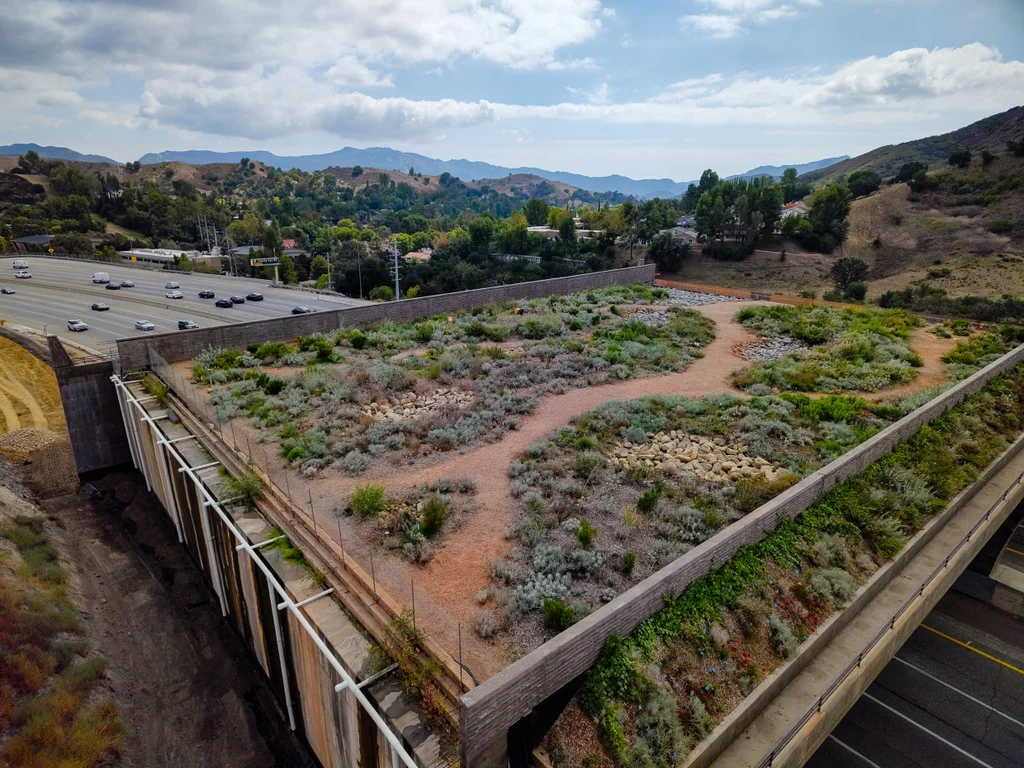
Due to the fire’s extreme heat, fungi and microorganisms in the top 14 inches of soil in the area were destroyed, leading the team to take samples of healthy soil from elsewhere in order to make something that Rock compares to sourdough starter. As the area is replanted, the soil biology will be restored. (The plants were chosen with fire resiliency and heat tolerance in mind; the area will also be irrigated with recycled water, which can be used to help protect it when the next wildfire happens.)
It was an unusual project for the Caltrans planting crew, says Rock, because they normally work on fairly simple plantings next to highways. The design team planned it out in a grid, with a mix of native plants in each square arranged in the same way they would be in nature.
Making the crossing quiet and dark
One of the biggest challenges for the new crossing was the location. Because it’s a major highway, both sound and light pollution were much bigger problems than in a place like Banff, which is an isolated national park.
“We have ambient sound levels that are the equivalent of a rock concert on the north side and maybe a folk concert on the south side,” says Rock. “We needed to find a way to create additional quiet space and additional dark spaces along the freeway.”
The team worked with an acoustical engineer who designed software to help them explore approaches to sound reduction. Terraced embankments under the bridge help deflect traffic noise and absorb low-frequency sounds. Along the sides of the bridge, planters with sloping walls also help shield animals from noise and light. The design reduces noise by 20 decibels, compared to 5-10 decibels for an ordinary highway sound barrier. Because sound is measured logarithmically, that’s a huge difference.
Since light bounces off concrete, creating the urban phenomenon called “sky glow” at night, the designers avoided using standard gray or white concrete for the bridge. Instead, it’s a dusty brown that helps keep the area darker. The team also asked Caltrans to swap out standard bright white LED streetlights for warmer yellow lights near the bridge.
Earlier in the construction process, after the basic structure of the bridge was put in place, biologists visiting the site at night watched as a barn owl flew back and forth in the newly dark strip across the freeway. “It’s one of those things that at that early stage just gave us all chills,” Rock says.
内容来自 Fast Company,版权归原作者所有。
阅读原文 ↗