

Hana Salah Palestinian journalist
IN GAZA, SURVIVING a disfiguring injury does not necessarily leave a woman with the time or space to grieve the body she has lost. There are children to feed, families to support and another day of survival to get through. For some, even the chance to recover has become a luxury.
Dareen Attiya, 40, knows this struggle intimately. An Israeli airstrike on her family home in Nuseirat, central Gaza, in May 2024 killed her husband and left her with devastating injuries to her leg. Part of her thigh muscle was destroyed, leaving her with a deep wound that has yet to heal fully. Her two daughters were also injured in the attack.
“I felt an electric shock shoot through my entire body,” she recalls. “I woke up to the sound of people trying to rescue me, my husband and my daughters. I couldn’t move or scream, but I could see my flesh burning and melting away.”
For two days, she says, maggots emerged from her wounded flesh as overwhelmed medical staff struggled with a lack of adequate sterilisation facilities and the inability to transfer her for specialist treatment.
She eventually underwent a limited reconstructive procedure. Skin was taken from her other leg to cover the deep wound left by the loss of muscle tissue. Although she says she was expected to remain in hospital for six months, she was discharged after just six weeks.
Only basic medical care
In Gaza, reconstructive surgery has become a matter of survival, not simply appearance. Dr Bassam Al-Masri, head of plastic and burn surgery at Al-Shifa Hospital, told Al Jazeera in October that only three or four specialist surgeons remained able to work in northern Gaza’s hospitals, compared with eight to 12 across the territory before the war.
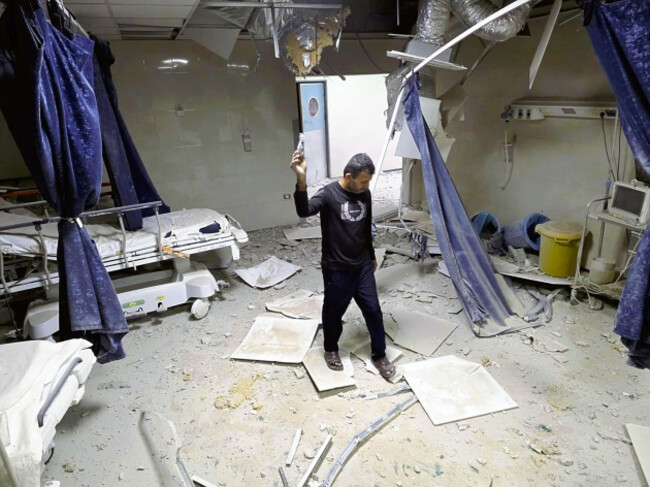
Damaged hospitals and shortages of precision surgical instruments, antibiotics and infection-control supplies have further restricted treatment. Delays in surgery, he warned, can lead to severe infections, permanent disability, amputation or death.
For Attiya, the consequences of her injuries continue to shape almost every aspect of daily life.
Cold weather aggravates the pain around her damaged nerves and tendons. She becomes exhausted, struggles to remain on her feet and sometimes falls. Yet stopping work is not an option.
With her husband gone and her daughters dependent on her, Attiya has returned to providing psychological support to others through local centres, even as she continues to live with the physical consequences of her own injuries.
“I have no choice but to carry on working,” she says.
She has repeatedly sought medical evacuation for specialist treatment abroad but says she has been unable to secure a referral.
The Rafah crossing with Egypt has remained largely closed since Israeli forces seized it in May 2024, with only intermittent reopenings. When limited passenger movement resumed in February 2026, just 50 medical patients a day were initially permitted to leave under arrangements requiring security screening and coordination, according to the Associated Press. Although evacuations have continued, access remains severely restricted.
The UN humanitarian agency OCHA reported that 119 patients, including 40 children, were evacuated between 3 and 9 November.
For Attiya, who continues to struggle with pain and limited mobility, treatment abroad remains out of reach. “They prioritise those who are on the verge of death,” she says. “But I die every day.”
Her daughters, too, are living with the consequences of the same strike. Both suffered burns and disfiguring injuries. One, now 13, has lost sensation in her left hand despite the limb remaining intact.
For Attiya, reconstructive surgery is not a matter of appearance. It is about being able to walk, work and care for her daughters without constant pain.
A face waiting to heal
For 38-year-old Nour Fathi Al-Hawajri, surviving an Israeli airstrike meant losing her mother, the sight in one eye and the face she once knew. Eighteen months later, she is still waiting for the chance to undergo reconstructive surgery abroad.
The attack on her family home in northern Gaza on 23 May 2025 left her with severe facial burns, shrapnel wounds and damaged teeth. She says she has been unable to secure a medical referral for the specialist treatment she needs.
That morning, her mother was preparing to cook rice while her father and brothers got ready for Friday prayers. Nour was sitting on the steps, reciting verses from the Quran, when the explosion struck.
She woke in hospital unable to open her eyes. A neighbour, Fatima, tried to reassure her that her mother was alive. Nour knew otherwise.
“It felt as though something had been torn from my heart,” she recalls.
Doctors treated her burns and shrapnel injuries, but her right eye remained severely damaged. She later underwent a minor operation to remove fragments from her face and hand. Others remain embedded in her body.
For months, Nour avoided looking in the mirror. The burns, damaged eye and missing teeth had changed the appearance she once took pride in.
“You might be surprised, but I didn’t care about my injuries at first because I had lost the most precious person in my life — my mother,” she says.
Now living in a tent in Nuseirat, Nour volunteers as a teacher and gives private lessons to support her family. Her injured eye still causes pain, and she says even the children look at her differently.
Before the war, she dreamed of pursuing a master’s degree in psychology and opening an educational centre. Those ambitions remain, but so does her need for specialist eye treatment and reconstructive and cosmetic surgery abroad.
She survived the airstrike. What she is still waiting for is the chance to recover.
A race against permanent scarring
More than a year after the October 2025 ceasefire, Gaza’s injured face another battle: accessing the surgery and rehabilitation they need to recover. For women like Nour, specialist treatment abroad remains out of reach, while shortages of essential medical supplies threaten to turn treatable injuries into permanent disabilities.
The World Health Organization estimated in May 2026 that around 43,000 people in Gaza had sustained potentially life-changing injuries since October 2023, including more than 3,400 cases of major burns. More than 50,000 conflict-related injuries were estimated to require long-term rehabilitation, yet no rehabilitation facility in Gaza was fully functional.
On 29 October, Médecins Sans Frontières (MSF) warned that Israeli restrictions on essential medical supplies had forced it to suspend production of specialised 3D-printed masks used to treat severe facial burns. Its last mask was produced on 14 October.
The masks help prevent excessive scarring and facial contractures that can restrict movement, vision, eating and speaking. Without timely treatment, patients risk permanent disabilities and more complex surgery.
“We have the medical expertise and the capacity to help these patients, but we are being deprived of the basic materials needed to do [our] work,” said Dr Feras Swairjo, MSF’s physiotherapy manager.
Since launching its facial burn rehabilitation programme in 2020, MSF has treated 348 patients, providing 587 customised masks, including 260 since the war began.
The crisis has continued to deepen. According to Reuters on 13 November, MSF’s Gaza City clinic was treating 70 patients with facial burns, including 50 children. Twenty urgently needed masks that the organisation could no longer produce.
The shortages are linked to a dispute over Israeli registration requirements for aid organisations. Israel says MSF failed to comply with rules intended to prevent aid diversion, while MSF says providing the requested details of its Palestinian staff without adequate safety assurances could put them at risk.
In a statement to The Journal, MSF said its remaining treatment options were increasingly limited. Physiotherapists continue to provide scar massage and other hands-on therapies, but stocks of compression garments are also running low.
For patients with severe facial burns, the consequences extend far beyond appearance. Delayed rehabilitation can leave scars tightening around the mouth and eyes, restricting basic functions and increasing the need for surgery.
For women like Nour, still waiting for reconstructive surgery abroad, the passage of time brings no guarantee of recovery.
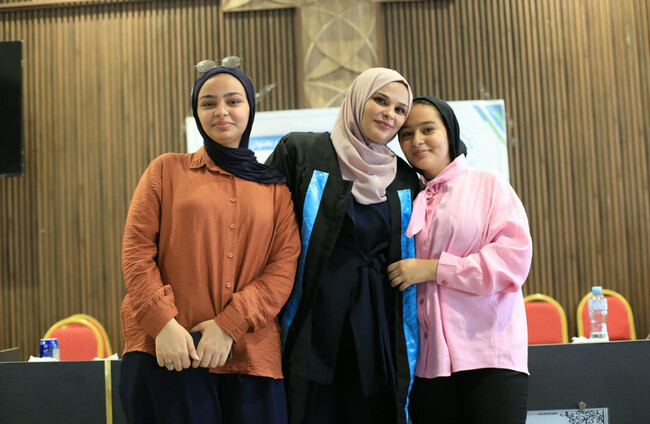
In October, Attiya stood alongside her daughters, Rona, 13, and Rancy, 16, to celebrate completing her master’s degree in mental health.
It was a milestone reached through pain, loss and the daily struggle to provide for her family. But she still needs surgery abroad, and has no certainty of receiving it.
For Attiya, as for Nour, surviving the airstrike was only the beginning.
In Gaza, life does not wait for the wounds of war to heal.