
Battle lines drawn for Govt over Triple Lock legislation
Taoiseach Micheál Martin has claimed rival parties are putting the lives of Defence Forces personnel at risk by misrepresenting the triple lock legislation facts.
Tánaiste Simon Harris has waved the Constitution in the Dáil, insisting "it [Irish neutrality] ain't changing" regardless of any legal developments.
The Opposition is united in warning Ireland is facing the biggest threat to our neutrality in a generation.
President Catherine Connolly is under pressure to decide between her personal beliefs and her professional role.
And a now high-profile, initially dismissed Fianna Fáil backbench amendment which could yet be the Government's only way of coming through the stand-off unscathed - provided Micheál Martin commits to a subtle climbdown on his previous views.
How did we get here?
Since it was first raised in the months leading up to November 2024's General Election, the plan to remove the UN Security Council element of the deeply sensitive Triple Lock legislation has always had the potential to be a debate which divides the country.
Now, with its final stages looming, it risks doing just that.
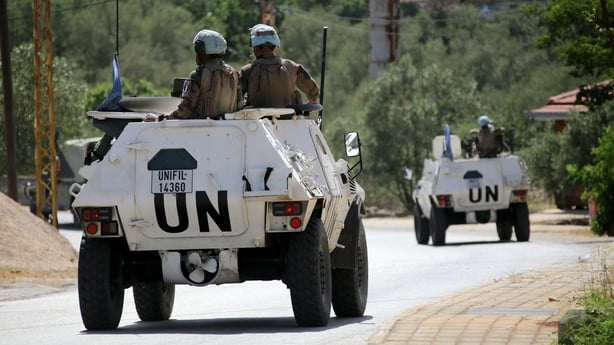
And, in the process, leaving the Government with little room to manoeuvre if it wants its new rules in place before UNIFIL's mandate in Lebanon finishes at the end of the year.
The source of the acrimony is the Defence Amendment Bill 2026, which would change Ireland's existing legislation allowing 12 or more Defence Forces personnel to be sent to a peacekeeping mission overseas only if there is Dáil, Cabinet and UN Security Council approval, to a double lock of Dáil and Cabinet approval only.
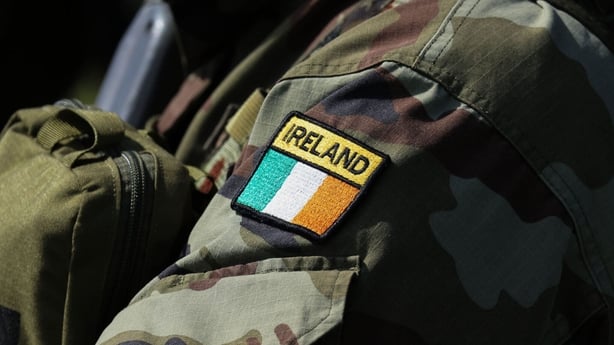
The argument from Government is that the current inability of Ireland to send Defence Forces personnel to peacekeeping missions without a UN Security Council mandate means Russia, China and, although it receives less public commentary from the coalition, the current US administration - three of the five permanent security council members - can effectively veto Irish peacekeeping efforts, and limit foreign policy.
However, while few are doubting the legitimately held reasons for that concern, Opposition parties insist resolving it by removing the UN aspect of the Triple Lock poses just as much of a problem to Ireland's long-held neutrality and opens up the possibility of this country being involved in non-UN actions contrary to this country's long-held views.
Both sides of the debate insist what they have outlined is too big a price to pay.
And with neither side backing down, Government and the Opposition will know there is much to potentially gain and lose during the tactical political warfare set to surround the future of the Triple Lock, the latest skirmish of which took place in recent days and which is set to intensify over the coming month.
This week's battleground: the referendum motion
That intensity has been growing day by day over the past week, sparked by a Sinn Féin motion seeking a referendum on the mooted Triple Lock changes.
During private members business in the Dáil on Tuesday, the party's foreign affairs spokesperson Donnchadh Ó Laoghaire objected to the Defence Amendment Bill which passed an initial Dáil vote in late October and is due to be examined by the Oireachtas defence committee next week.
Saying Irish "people have a deep, gut understanding of neutrality", Deputy Ó Laoghaire called for a referendum to protect Irish neutrality and ensure the Triple Lock remains in place, a view quickly challenged by Fine Gael TD and Minister of State at the Department of Foreign Affairs Neale Richmond, who said:
"We were military neutral before the Triple Lock existed, and we will remain military neutral after it is reformed."
The motion itself was defeated, with a Government counter-motion being passed in the Dáil by 84 votes to 77 on Wednesday evening.
However, the fact the result was closer than some had anticipated, in part due to Independent TD Barry Heneghan's decision not to vote with the Coalition, gave Opposition parties further encouragement.
On repeated days this week, Sinn Féin, Labour, the Social Democrats and People Before Profit-Solidarity all targeted the Triple Lock changes, resulting in angry exchanges - and, they hope, momentum - before next week's committee stage discussions.
During Tuesday's Leaders' Questions debate debate, Sinn Féin leader Mary Lou McDonald took aim at Taoiseach Micheál Martin, accusing him of "taking the Irish people for fools" and alleging to some TD that he was failing to live up to former taoiseach Brian Cowen's 2002 Nice Treaty comments that "there will be no change to the Triple Lock unless the people first give their consent in a referendum".
On Wednesday, Social Democrats TD Sinéad Gibney said the "Government is determined to ram through the abolition of the Triple Lock despite clear public support for the Triple Lock and our neutrality".
And on Thursday, People Before Profit-Solidarity TD Paul Murphy claimed the Triple Lock "stops the Government of the day sending troops wherever they want or wherever the US or Nato asks them to".
The criticisms led to an equally robust response from both the Taoiseach and Tánaiste, with Micheál Martin accusing Sinn Féin leader Mary Lou McDonald on Tuesday of "endangering Irish troops" by suggesting future non-Triple Lock missions to Lebanon could be an "Israeli-friendly mission" and warning a "blatantly false narrative and untruth" was being repeatedly told by the Opposition over what removing the triple lock would cause.
Similarly, on Thursday, Tánaiste Simon Harris held up a copy of the Constitution in response to Opposition criticism to insist "it ain't changing", saying:
"This Constitution means we can’t join common defences and it ain’t changing. Nothing in the legislation changes this. But without it you are limiting the opportunities for this country to continue its proud peacekeeping service."
Ultimately, the Dáil exchanges did not result in Sinn Féin's referendum motion passing, with the Government surviving the skirmish.
But they did ensure the establishment of a renewed energy and momentum for the Opposition's motives - a much-coveted weapon on all political battlegrounds.
Next week’s battleground - the defence committee
That attempt at building momentum is likely to return next week, when a more substantial challenge to the planned changes to the Triple Lock takes place in the form of the Oireachtas defence committee - a stage that in theory is about legislative process, but in reality is anything of the sort.
From this coming Tuesday, the committee will be tasked with examining the Defence Amendment Bill 2026, which passed an initial Dáil vote in late October by 79 votes to 71, amid similar rows to what transpired in recent days.
In all, some 224 amendments to the Government's Triple Lock Bill have been submitted to the committee from various political parties, a figure parliamentary officials are likely to whittle down to closer to 100 that are deemed legitimate by Monday.

At that point, defence committee members are meant to do away with their party political jerseys, put their legislator hats on and discuss the amendments in a fair and non-partisan manner, before holding a public meeting with Minister McEntee and subsequently sending the Triple Lock Bill to report and final stage to the Dáil and Seanad.
In theory, that is a relatively simple process, particularly as Government has a slim but significant one-person majority in the committee and can, if needed, push through the bill any time it wants.
But in practice the coming days are likely to prove far more complicated.
The main reason why is that Opposition TDs and senators are certain to slow-walk the amendments discussion stage, with several already saying they must ensure time is given to examine all legitimate amendments - discussions they insist should not and will not be rushed.
This reality is added to by the fact that while the committee will meet on Tuesday and Thursday next week, this may add up to just five hours of meetings (6-8.30pm on Tuesday and 9.30am-12pm on Thursday) with no plans, for now at least, to extend their length.
One committee member opposed to the Triple Lock changes told RTÉ News such a limited timeframe will inevitably result in an amendments overflow into further meetings the following week, before suggesting it is highly likely Minister McEntee's appearance at the committee will not take place until the first week of December, at the earliest.
And with the Dáil and Seanad's final day before Christmas being Thursday 17 December, such a delay would realistically leave Government with just six or seven Dáil and Seanad sitting days to shepherd the Bill through both Houses final stages, if its end of year deadline for the bill to go to President Catherine Connolly is to be met.
It should not be forgotten, of course, that if this happens it will not be the first time the committee proceedings have been slow-walked, with committee chair and Sinn Féin TD Rose Conway Walsh writing to Minister McEntee in late October to say that, unfortunately, the committee would not be able to meet in the first week of November to discuss the Triple Lock as Government had hoped because of urgent business.
What was that urgent business? "Co-hosting an inter-parliamentary conference on the common foreign and security policy," Deputy Conway Walsh explained.
Significant, sure, but urgent? Perhaps not so much.
The delay raised eyebrows at the time among Government TDs, who claimed it is evidence some committee members will deliberately move the Bill at a snail's pace to make their point, and more than a few barely concealed grins among the Opposition who will argue as long as the snail is technically moving they are doing nothing wrong.
The Willie O’Dea amendment
Given it has a one-person majority in the committee, the Government could of course decide to guillotine committee time for the bill's discussion if it suspects foul play, moving it quickly onto the final Dáil and Seanad stage in order to reach its end of year deadline.
But, given that would give the Opposition the open goal that some in Government believe it is craving by allowing rival parties to both criticise the Coalition's position and argue debate is being silenced, an alternative option could yet prove more likely. Albeit with a catch.
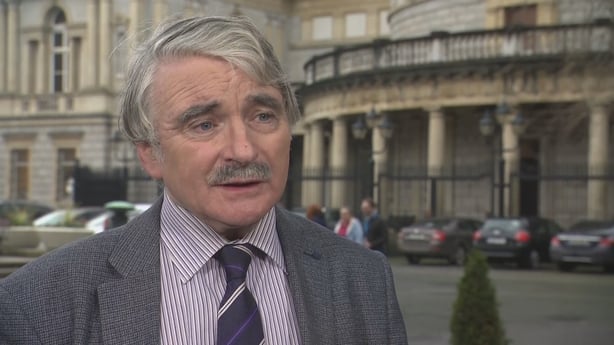
On Wednesday, Fianna Fáil TD and former minister for defence Willie O'Dea - no stranger to the art of a well-timed political intervention - said that he might have an idea.
The idea is to replace the UN Security Council element of the Triple Lock with a UN General Assembly resolution instead.
Seemingly out of the blue, nine Fianna Fáil TDs - Tom Brabazon, Cathal Crowe, Padraig O Sullivan, Aindrias Moynihan, Pat 'The Cope' Gallagher, Sean Ó Fearghail, John McGuinness, John Connolly and Michael Cahill - put their names to the now drawn-up amendment.
They said they would support its introduction as a way to back the Government position while also taking account of the legitimate neutrality concerns of the public.
Not self-preservation from a potential future voter backlash, several have since insisted. Just trying to help.
That Wednesday evening suggestion quickly grew legs, with the Taoiseach responding to questions on it at an EU event in Berlin on Thursday by saying:
"I think this is something we can work on at [Oireachtas defence] committee stage, to ensure the essence of that idea, which we don't have a fundamental problem with, can be absorbed."

Those close to the Taoiseach have since indicated while the Fianna Fáil leader still believes the UN Security Council element of the Triple Lock needs to be removed, and does not believe a UN General Assembly resolution would be as practical as is claimed as no such peacekeeping resolution has been agreed since the UN peacekeeping financial crisis of 1964, he is now more open than before to some kind of legal nod to a non-security council UN position to calm Irish neutrality concerns.
Such a move suggests a subtle pivot, as the Taoiseach had previously dismissed the UN General Assembly idea when it was raised in a Fianna Fáil parliamentary party meeting a month ago, and separately by Opposition parties, describing the plans on 27 October as "not realistic at all" and that "anyone who knows anything about the UN" would say it is not feasible.
Time, and necessity, has a habit of changing public political comments though, with one Fianna Fáil TD on the Willie O'Dea amendments list telling RTÉ News on Friday "I think it'll be the get-around, for a lot of the public it'll address concerns".
'The devil's in the details'
Whether a UN General Assembly amendment to the Government's existing plans would really be as effective or legally binding as its supporters claim, or just be some useful protection for coalition TDs, remains up for debate.
However, the fact it hasn't been dismissed by non-amendment list Government TDs or the opposition either is notable.
Responding to the Fianna Fáil backbenchers' amendment to RTÉ Radio's Today with David McCullagh programme on Friday, Fianna Fáil TD and Minister of State at the Department of Justice Catherine Ardagh said "my own opinion is we can't rely on the security council" and that "the devil's in the detail over how exactly it [the Bill] would be worded".
Similarly, Sinn Féin's spokesperson for justice Matt Carthy said "anything that emphasises the role of the UN is better than what's there at the minute", before adding "anything that abolishes the Triple Lock neutrality protection should not be allowed to proceed without the Irish people having a say" via a referendum.
And while Minister McEntee told reporters that she does not want to replace the UN Security Council rule with another which "would in fact tie our hands further" and result in "another potential block," she did leave space for discussion by saying she will engage with all amendments during the committee stage debates.
Many other groups both inside and outside of Leinster House will be keen to make their views known too this afternoon, when a national rally organised by the Irish Neutrality League, the Irish Anti-War Movement and the Ireland-Palestine Solidarity Campaign takes place in Dublin city from 2pm.

Among Dáil parties expected to attend will be Sinn Féin, Labour, the Social Democrats, People Before Profit-Solidarity, Aontú and the Green Party, but one politician previously vocal in her support of the Triple Lock will understandably not be following suit.
During her time as an Independent TD, Catherine Connolly advocated for the retention of the existing rule as a way - she argued - to support Ireland's neutrality.
However, she is now President of Ireland, meaning her professional position takes precedence over any potential personal views, telling Nuacht's 7Lá programme on Wednesday during an interview to mark one year in the role that while she will examine any legislation put before her carefully.
As President, any decisions are limited to whether a bill is constitutional rather than whether she personally agrees with its purpose.
Should the Defence Amendment Bill survive the committee stage amendments, and final votes in the Dáil and Seanad, it will eventually reach Áras an Uachtaráin - and President Connolly's judgement - under intense scrutiny in the latter stages of December.
At that point, Ireland's Head of State will be tasked with either signing it into law, discussing its constitutionality with the council of state, or potentially sending it to the supreme court for review, with each option bringing its own pressures.
With much at stake for the Government, the Opposition and the wider public depending on what happens to the future of the Triple Lock, expect those pressures to rise, not fall over the month to come.
内容来自 RTE,版权归原作者所有。
阅读原文 ↗