
This Mexico City mall has a massive Carsten Höller slide as an amenity
Tucked into Mexico City’s Colonia Granada, a former industrial district turned high-end enclave, a Carsten Höller installation lets passersby slide through art—literally.
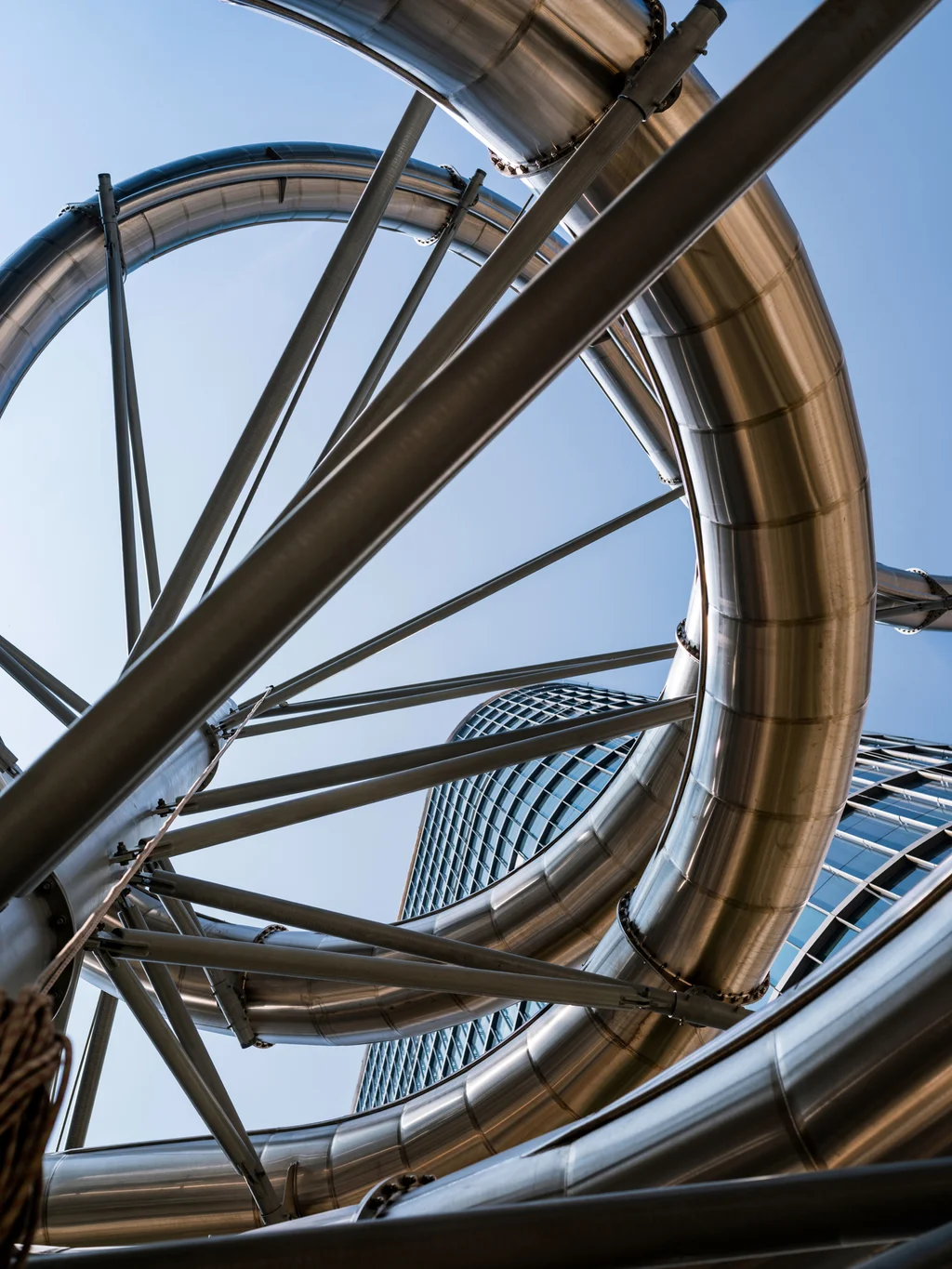
Titled Mexico City Slides, it is Höller’s largest commission to date. The installation consists of four monumental spiral slides, weaving around one another. While the Brussels-born artist has typically built his slides as temporary exhibitions at art institutions like the Tate Modern, the Moderna Museet in Stockholm (where he lives and works), and the New Museum, this one is at a shopping center and is a permanent installation.
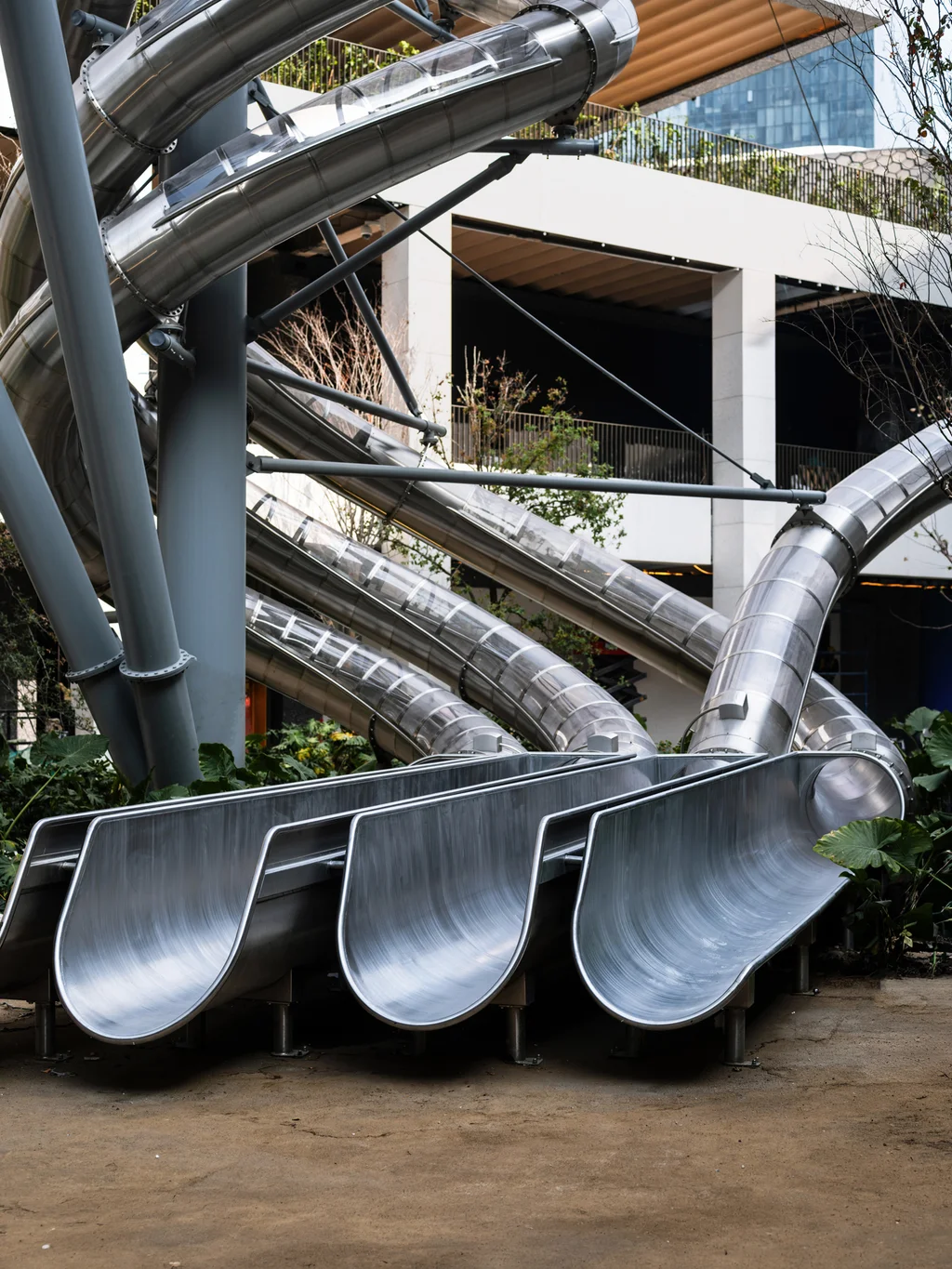
It’s an amenity at Antara, an upscale mall featuring restaurants like Nobu and a soon-to-open Carbone, fashion brands like Zimmermann and Brunello Cucinelli, and Latin America’s largest Sephora. Antara’s developers commissioned the slide to help unite a recent expansion to the shopping center, and to make the destination more enticing to visitors.
The slides, made of stainless steel and plexiglass, range from 12 to 38 meters (39 to 125 feet) in height and 31 to 90 meters (102 to 295 feet) in length. The four structures start in different places, but all end in Antara’s new courtyard.
When Antara opened in 2006, it was the first open-air mall in Mexico. The project leaders, the architecture studio Sordo Madeleno and its development arm, SOMA, wanted it to become a dynamic place for people to hang out. “We’ve always had a vision to create these urban centers where people can walk safely and spend their time,” says Javier Sordo Madaleno de Haro, vice president of SOMA, adding that “the complexity of the landscape in Mexico has always been a challenge for people to move around.”
Antara has been successful, bringing 12.7 million visitors annually. Recently SOMA added almost 1 million square feet of space—the size of 15 American football fields—for offices like Google and Capital One, a Rosewood hotel, retail, and more restaurants. The slides sit in the expansion’s newly created courtyard and tie the mixed-use project together.
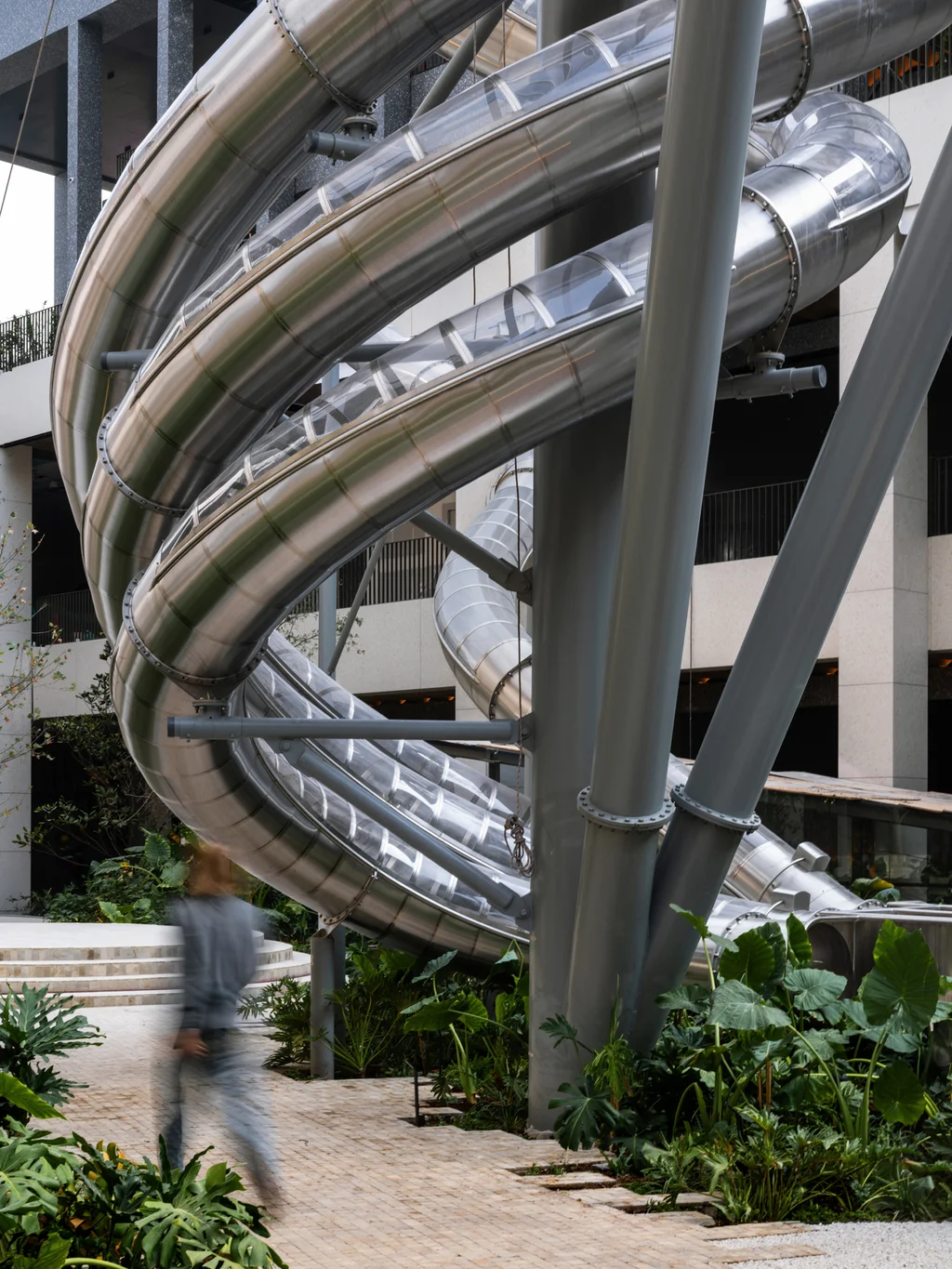
“The main idea behind [the artwork] was to connect these four different uses and spaces with four different slides, and then have all of them land at the center of the project, which is the main plaza,” Sordo Madaleno de Haro says.
Conversation around bringing Höller’s work to the expansion began two and a half years ago, and he fabricated the slides in Germany 18 months ago. The pieces arrived in Mexico early this year, and are now set up and functional; the slides are to open to the public in December.
Building an interactive artwork of this scale brought significant engineering challenges, particularly in an earthquake-prone city—details that had to be addressed by the artist and the development team.
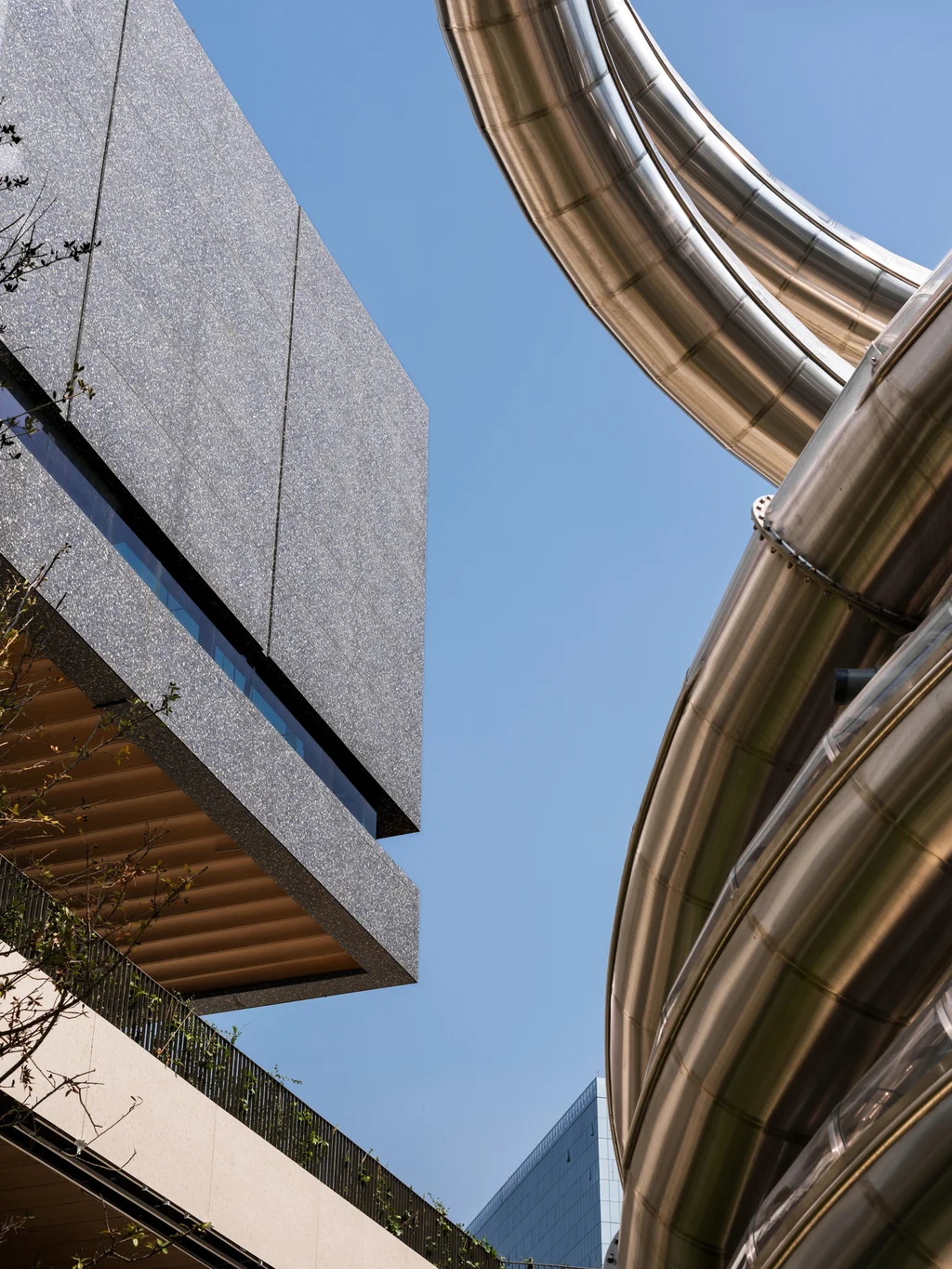
“The slides are all in different places in the buildings, and when these buildings move, they move in different directions, and they’re not moving in the same way. They have different heights,” Sordo Madaleno de Haro explains. “The challenge was how this piece interconnects to these different spaces.”
For Höller, the installation brings not just an artwork to look at, but joy and play into daily urban life. “People sliding from a hotel, from offices, from restaurants and from an art center are brought together in the air and land next to each other,” he said in a press statement. “They share the experience of being taken out of their usual form of being, into the unknown, dreamlike territory of simultaneous joy and fear.”
内容来自 Fast Company,版权归原作者所有。
阅读原文 ↗