
A SOLDIER HAS said he became “angry and frustrated” in calls with a commanding officer in the convoy because they had become frustrated.
In other evidence another soldier denied attempting to deceive the inquest into the killing of Private Seán Rooney while on UN peacekeeping duties in Lebanon four years ago over changes in his recollection of what happened during the fatal convoy.
It followed claims by counsel for the deceased’s family, Seán Guerin SC, that there were changes by Corporal (then Signalman) Richard Shanahan between his written deposition and oral evidence over what happened after a convoy from their base in south Lebanon to Beirut Airport became separated.
The barrister said there seemed to have been “a common affliction of the memory” of those in the army vehicle not involved in the incident which resulted in Pte Rooney’s death.
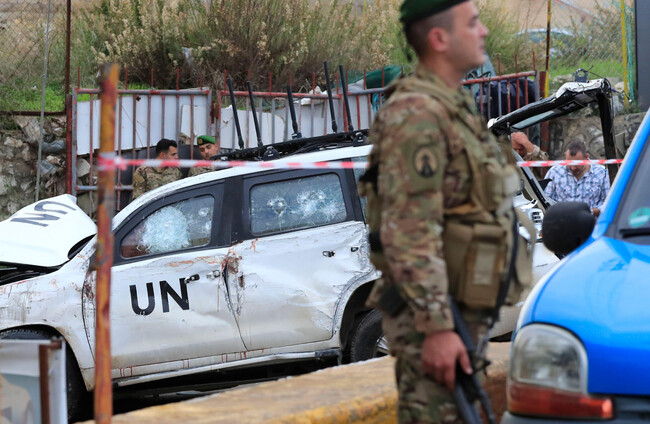
Seán Rooney (24), from Newtowncunningham, Co Donegal suffered fatal gunshot wounds in an attack which took place near the Lebanese village of Aaqbiyeh after the military jeep he was driving became separated from the lead vehicle on 14 December, 2022.
The deceased, who was attached to the 27th Infantry Battalion at Aiken Barracks in Dundalk, Co Louth, was driving a UN-marked vehicle which was fired on by armed militia linked to Hezbollah after a group of locals had surrounded them in Aaqbiyeh.
The incident occurred while the convoy was bringing two soldiers from Camp Shamrock to the airport in Beirut after they had been granted compassionate leave to attend funerals of relatives back in Ireland.
The inquest had previously heard the two vehicles became separated when one of them was briefly delayed by an engine problem from leaving a UN outpost known as EP28 that marked the border of the UNIFIL area of operations where they had stopped to remove UN flags from their jeeps.
In a written deposition, Shanahan, who was in the rear of the lead vehicle, described how his commanding officer, Captain David Kelly, had instructed their driver to stop on a slip road to the highway to Beirut a short time later to make sure the headlights behind them were from their colleagues’ vehicle.
In evidence, however, he admitted that their vehicle had gone a few hundred metres and possibly up to one kilometre down the highway before they had reversed back down off it after realising they had become separated.
Shanahan also accepted their vehicle had returned to EP28 near the Litani River when he originally claimed it had only returned to the turn-off for the highway where they had agreed to meet up.
Guerin told the third day of the inquest that the two particular mistakes by Shanahan were “a feature of the recollection of more than one of the occupants of that vehicle.”
The barrister said there seemed to have been “a common affliction of the memory” of those in the lead vehicle.
However, Shanahan replied that he was “not trying to perceive a change of perception” and denied any attempt to mislead the inquest.
Establish contact
He recounted how Kelly had managed to establish contact with the other vehicle via WhatsApp and instructed them to meet back at the turn-off for the highway to Beirut.
However, they discovered from a subsequent call that the other vehicle had been surrounded by people with pistols and metal bars, while they could hear gunshots over the phone.
While they were waiting at the junction, Shanahan said they were worried something similar might happen to them as a car which appeared to film them while driving past their vehicle returned a short time later and stopped near them.
The witness also outlined how the lead vehicle suffered a blowout when they went back on the highway after deciding to go to assist the other vehicle when they realised they were in trouble.
Shanahan described how they abandoned their jeep on the highway for their own safety and tried to make their way back to EP28 through fields to avoid detection by vehicles that appeared to be looking for them.
In reply to questions from Guerin, he accepted that a failure to notify the Tactical Operations Centre in Camp Shamrock about the other vehicle being in danger had delayed any support being made available by up to 16 minutes.
Angry and very frustrated
In other evidence, the soldier in command of the military jeep driven by Rooney described how he became “angry” and “very frustrated” with Kelly in a call after their convoy became separated.
Corporal Josh Phelan told the inquest at Dublin District Coroner’s Court that Kelly had contacted him at 10.50pm to give them instructions to turn around to meet up again at a turn they had missed.
Phelan became visibly distressed while giving his evidence as he recounted details of the terrifying incident when they were confronted by a crowd of up to 60 locals who were trying to get them out of their vehicle.
The inquest also heard details of two subsequent calls for assistance that Phelan made to Kelly about 12 minutes later.
Quick Reaction Force
The witness said he had advised the lead vehicle not to come to their assistance as it was unsafe, but to get a Quick Reaction Team from Camp Shamrock who would have taken about an hour to reach their location.
Another option was to get assistance from the Lebanese Armed Forces.
Phelan claimed he was instructed to put his phone down by the people outside the vehicle after which he placed it on his lap on loudspeaker during a call which lasted almost four minutes to Kelly.
He also described hearing “a massive explosion” after the back window of the vehicle was smashed, and their attackers were getting the boot door open.
Phelan admitted that they had not been provided with any information on what to do in the event of becoming separated on the journey in advance of leaving their base.
The inquest heard soldiers involved in the mission had only been given a briefing about the route as they were getting ready to leave Camp Shamrock in their vehicles.
Phelan, who was in the front seat of the Toyota Land Cruiser beside Pte Rooney in the second vehicle, said they had not been given any specific information about the route.
He explained that Kelly was very familiar with the route, and they were essentially advised to follow the lead vehicle.
Asked by the coroner Myra Cullinane if they had been instructed about taking a particular turn for Beirut shortly after leaving a UN military outpost where they had stopped for a few minutes, Phelan replied: “Not from my memory, no.”
The witness described how they had followed the taillights of a vehicle in the distance as they left the outpost.
However, Phelan said it had taken six to seven minutes before they realised they had gone the wrong route as it was not the lead vehicle in the convoy.
Asked how long they had left the outpost after the lead vehicle had departed, he estimated that it was “no more than a minute or two, maybe three.”
The inquest before a jury of six women and four men was adjourned and will resume on Monday morning.