
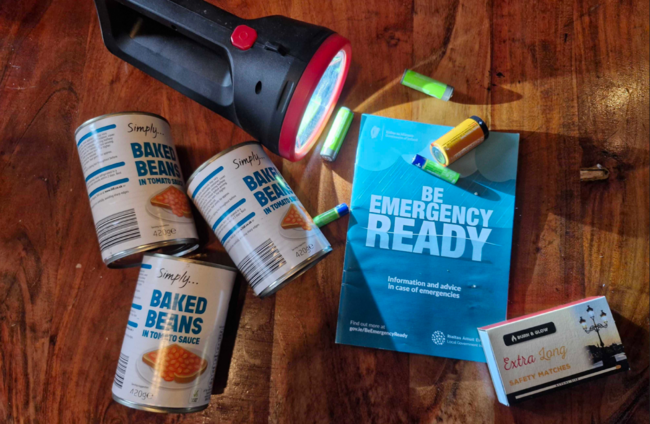
THE GOVERNMENT’S BE Emergency Ready booklet has caught the public’s attention, and even caused alarm for some – but experts say the campaign is just sensible guidance in case of unlikely events.
The Journal found large numbers of examples of people expressing concern or fear in the wake of the booklet’s arrival in their homes in recent weeks.
On one Facebook post with more than 200 responses, one person said: “I have about 500 litres of water and tinned foods.” On a Reddit thread, someone asked: “Anyone else find the sudden push for emergency preparedness a bit unsettling?”.
People who haven’t yet received the booklet also voiced concern. One person said: “As an older person, I’m very concerned about everyone stockpiling. I got no booklet in the post and don’t know what this panic is for.”
Mark Maguire, a cultural anthropologist from Maynooth University, told The Journal that the way the information was delivered by the government was almost guaranteed to be anxiety-inducing.
“The message is very unspecific and highly specific at the same time. So that is almost a guarantee of anxiety if somebody’s reading it,” he said.
However, Pete Lunn, founder and head of the Economic and Social Research Institute’s Behavioural Research Unit, said the idea behind the campaign is to help households think ahead and do something in case of emergencies.
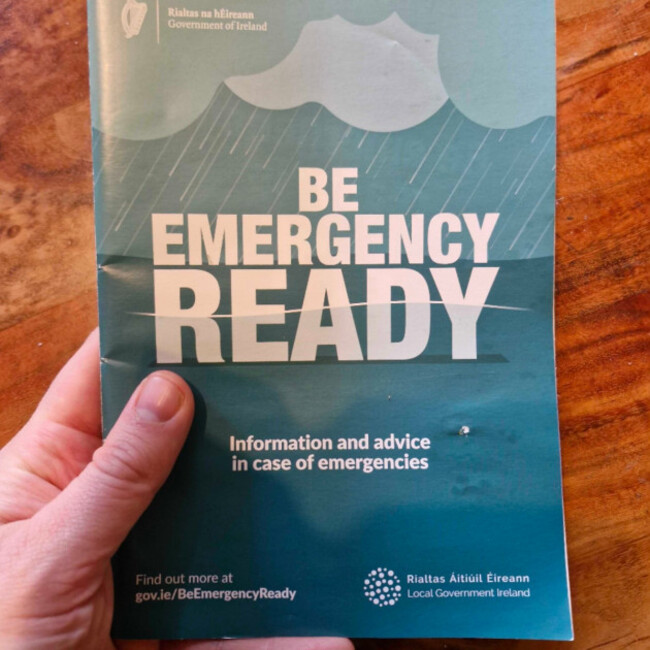
Be Emergency Ready
The campaign was formally launched on 28 August this year and a booklet with advice on preparing for power cuts, flooding and other emergencies was issued in September.
It’s part of a wider European effort on emergency preparedness – and Ireland’s own recent experience of severe weather played a role in the timing of the booklet.
The government’s 2024 National Adaptation Framework also identified emergency planning as an area that would need to respond to increasingly severe climate-related events.
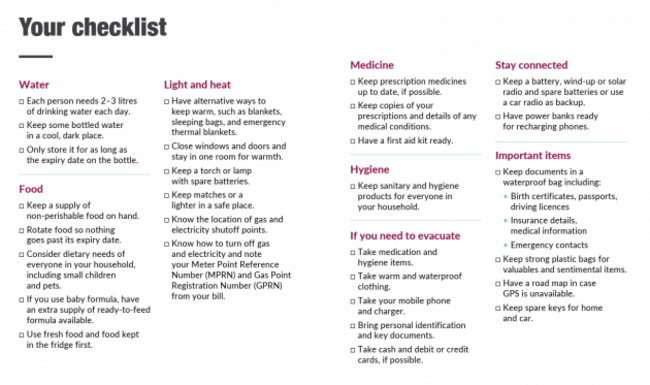
The Be Emergency Ready checklist includes non-perishable food, two to three litres of drinking water per person each day, a torch, spare batteries, a radio, medicines and copies of important documents.
The government attempted to curtail any concern before it began. The Journal recently revealed that it dropped plans to tell households to be self-sufficient for at least 72 hours during emergencies because of concerns it could prompt anxiety.
But since the booklet began showing up in people’s post boxes, members of the public have taken to online threads and group chats to discuss stockpiling and question how worried they should be.
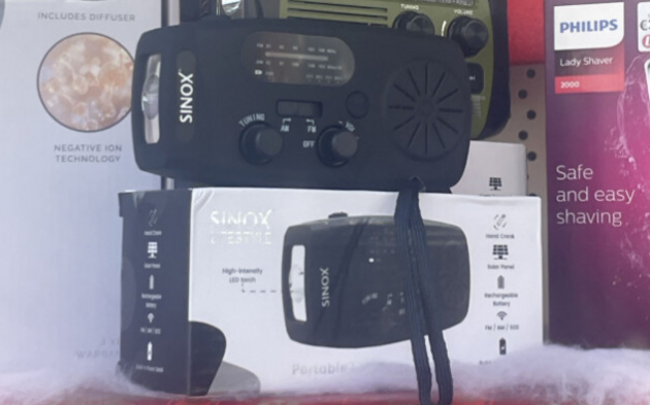
In the weeks after the booklet was released, shops in Dublin also saw an uptick in sales of wireless radios and battery-powered lamps.
People in Ireland aren’t the only ones taking action on foot of emergency preparedness advice – the equivalent of around €1.75 billion was taken out of British ATMs in a single week after the UK released its own campaign.
Now, following weeks that saw cyber incidents on supermarket fridges, bomb threats across Europe, and outages affecting Revolut and Microsoft – the anxiety appears to have worsened.
While appearing on RTÉ’s Late Late Show after the public broadcaster evacuated its campus due to hoax bomb threats, Taoiseach Micheál Martin admitted that “threats are much higher” now thanks to advanced technology.
Martin said that he believed the information in the Be Emergency Ready booklet was “wise counsel”.
One mother took to a parenting forum to say that after hearing Martin’s comments, she was very worried about the future. She described the advice as “overwhelming and frightening”, while another person admitted they were “having a bit of a panic”.
Maguire believes the campaign communicated that there is a threat the public should prepare for, but didn’t say what that is – which can leave people feeling anxious.
“‘Be very prepared for something we won’t tell you about, which may or may not happen, but it probably will’ is an extremely strange message to send out.”
Maguire said it’s “perfectly logical” for a member of the public to wonder what threats are possible after being warned to prepare themselves.
“There was much more information required about what the threats specifically are,” he said.
In response, a spokesperson for the Department of Defence said the campaign is designed to help individuals, families and communities prepare for a “range of potential disruptions”, including severe weather, flooding, power outages, water supply interruptions and communications outages.
“This approach aligns with similar public preparedness campaigns being delivered across Europe,” they said.
“The campaign is about providing practical, accessible and reassuring preparedness information that helps people take sensible steps to prepare for emergencies, while supporting stronger community resilience across Ireland.”
‘Common-sense approach’
Other experts in the area say that the campaign simply sets out common-sense steps for the public to take in the case of emergencies.
Pete Lunn said that there’s always a group in society who have low trust in government and might assume there is a more sinister reason behind the information campaign.
Conspiracy-tinged theories on the emergency advice have cropped up online in recent weeks, with people suggesting governments want “fearful citizens”.
But, speaking to The Journal, Lunn said the reason the government is sending out this information is that it is “just a sensible thing to encourage your population to do – even though the risks that are involved are low”.
Lunn said that though research suggests a large majority of households see this type of information as sensible advice, people’s perceptions of risks can vary.
“As soon as we think something could happen, we find it quite difficult to think of things in proportion to how unlikely they actually are,” he said.
“I think one of the things that a booklet like this does is make people think that things are possible with a pretty low probability, and they might worry that those things are more likely than they previously thought they were if they read a booklet like this.”
Lunn said that as long as this doesn’t produce panic – which he said there is no evidence to suggest it has – then it might not be a bad thing as it may lead people to take the advised steps to prepare.
Douglas Cubie, a senior law lecturer specialising in disaster law and extreme weather events at University College Cork, said the information is a “very measured, common-sense approach” that he doesn’t see as being anxiety-causing.
Speaking to The Journal, the law lecturer said the emergency preparedness information should be looked at similarly to how we view government communications on road safety and gas safety.
“There’s a variety of risks that we all hope don’t happen to us, but it’s important that the public has information on them,” he said.
“I see the Be Emergency Ready campaign as part of that overall responsibility of the government to ensure that the public has information of risks, knowledge of risks, and actions they can take.”
Cubie said the advice doesn’t mean people should take “extreme measures”, but take sensible measures like having a small bit of extra food and water, and having your phone charged.
He said that different parts of Europe are facing different risks at the moment, and when it comes to Ireland, one of the key risks is weather events.
As our society is more interconnected than ever, Cubie said the loss of power or water has a “much greater impact”. Minister for Defence Helen McEntee also highlighted the impact of extreme weather events while launching the campaign.